
Last updated November 14, 2026
 Wrought iron
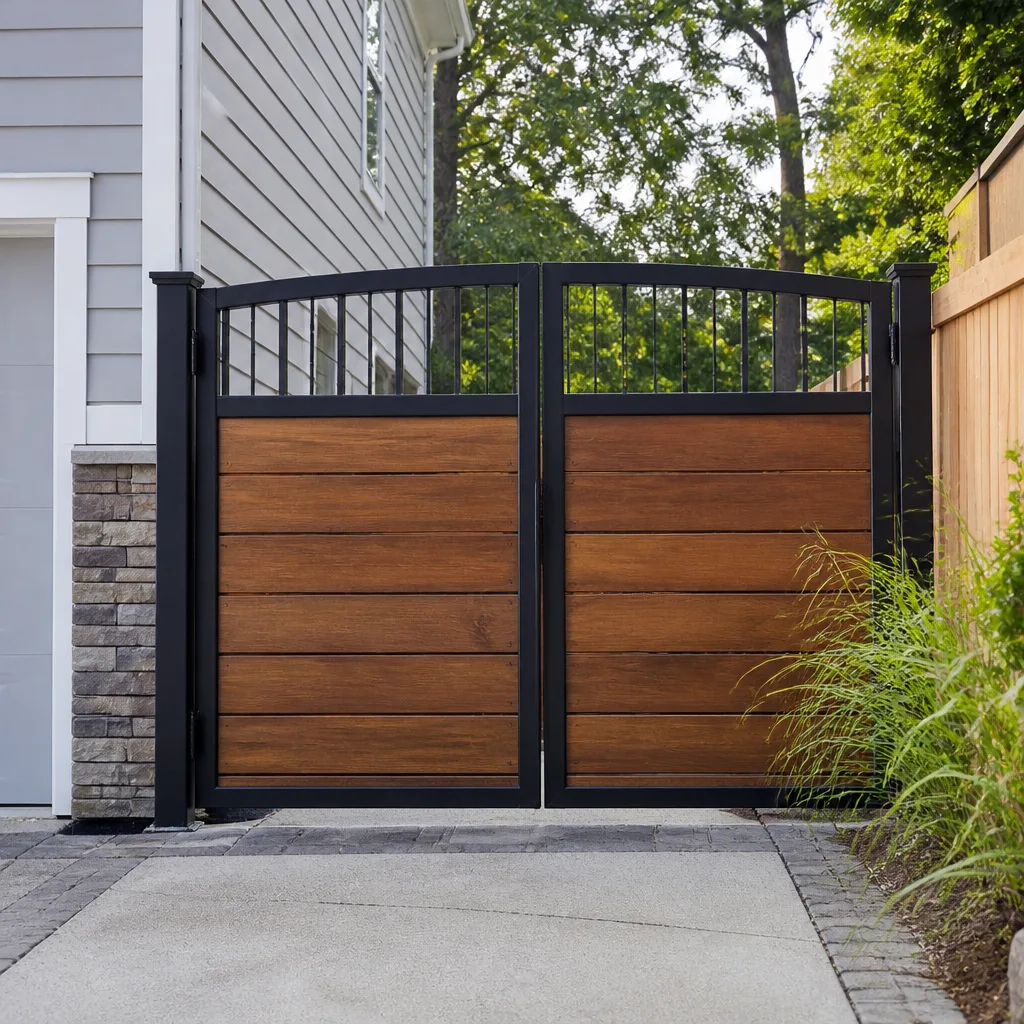 Wood & steel frame
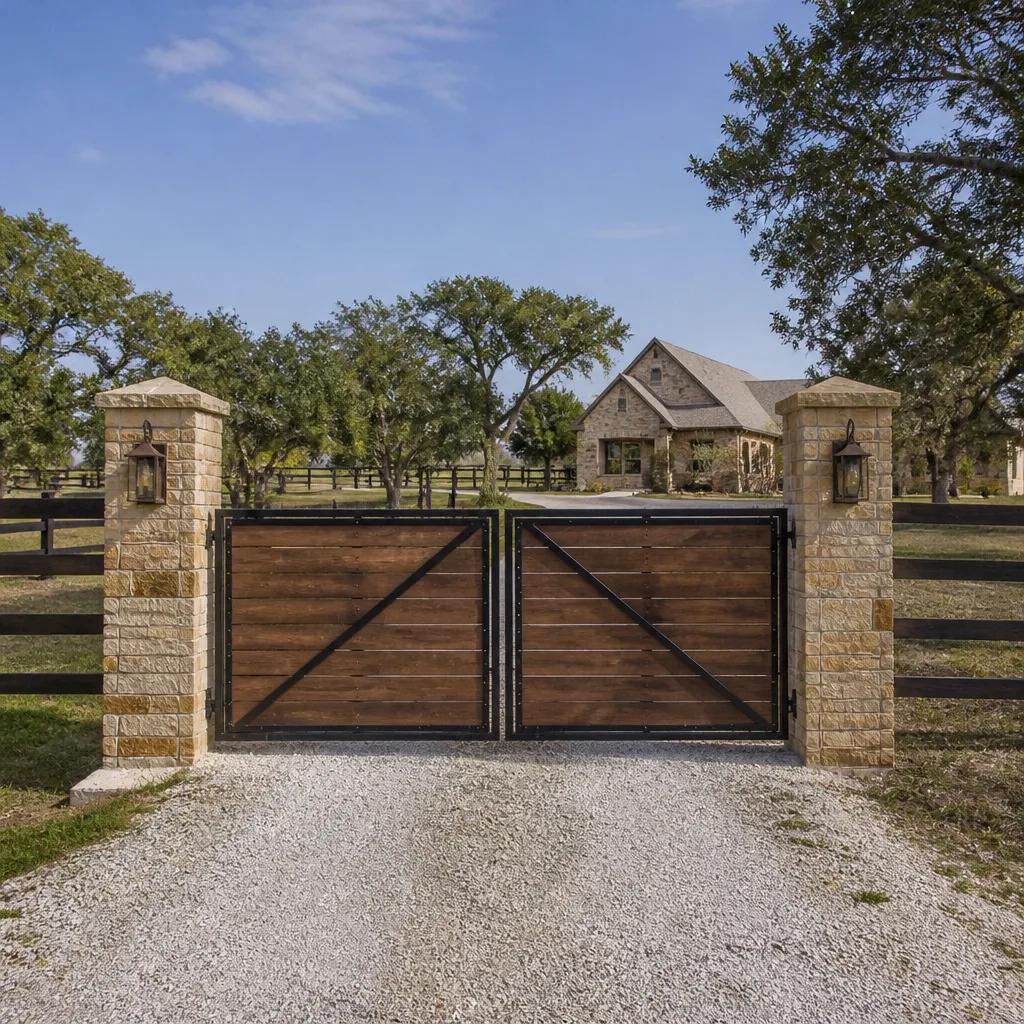 Farm & ranch
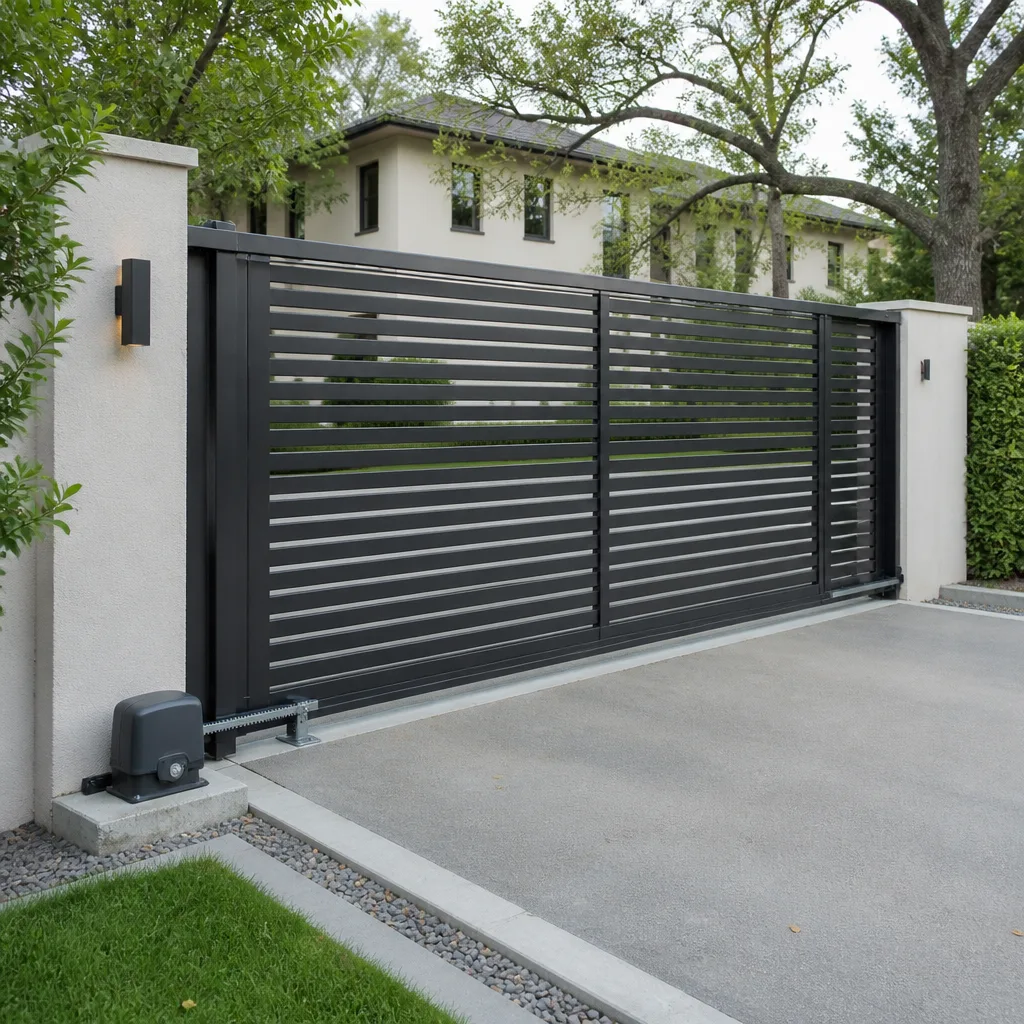 Sliding driveway gates
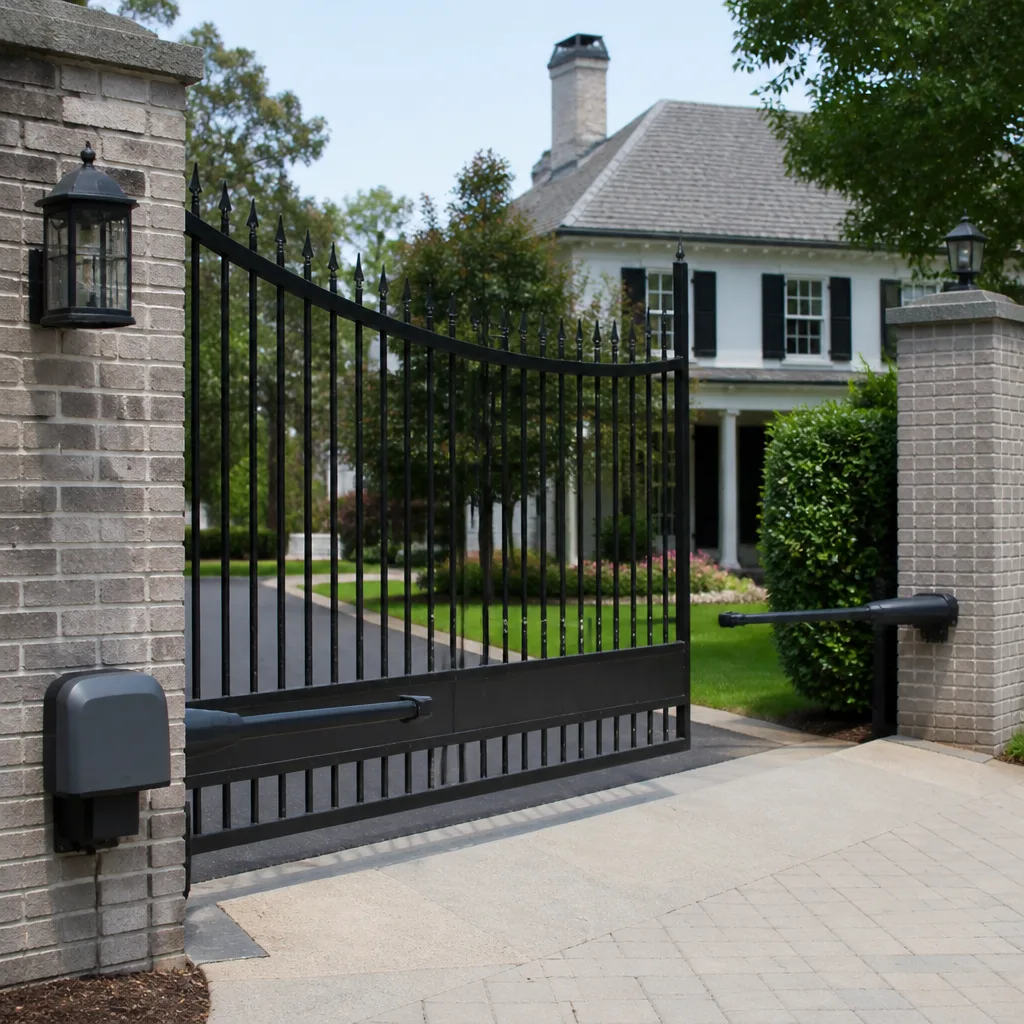 LiftMaster operators
Free on-site gate assessment - hinges, posts, and your LiftMaster or Nice gate operator checked before anything is quoted
The assessment is free and the quote is the invoice.
Get your free estimateGate Repair Warning Signs: A Waco Homeowner’s Reference Guide
A gate that hesitates for half a second before it moves isn’t warming up. That stutter is one of four specific failure conditions announcing itself, and which one you’re hearing decides whether you have weeks to schedule a repair or a single afternoon before the gate stops moving entirely. This is the part most homeowners miss: a symptom that points to a simple adjustment and a symptom that points to a failing control board can look nearly identical from the safe side of the driveway. Below, we walk through each warning sign, what it means at the component level, and how to tell which ones mean “book a repair” and which mean “stop using the gate now.”
Quick Answer
In Waco, the most common gate repair warning signs are hesitation before movement, reversing mid-travel, grinding or squealing, stopping partway open, and unexplained beeping from the operator. Hesitation and reversal usually point to the control board, safety sensors, or the operator itself; grinding and partway stops usually point to the mechanical side, including track, rollers, and hinges. Any gate that moves unpredictably or fails to reverse on an obstruction should be parked until a technician sees it.
Styles & brands we work with
- Wrought iron
- Wood & steel frame
- Farm & ranch
- Sliding driveway gates
- LiftMaster operators
Table of Contents
- Why Gate Failures Announce Themselves First
- Symptom-to-Cause Mapping: What Each Behavior Actually Means
- Operator-Side or Mechanical-Side: How to Tell Without Opening a Panel
- The Waco Clay Soil Problem: Warning Signs You Can’t Hear
- “Schedule a Repair” vs. “Stop Using the Gate Now”
- What to Record on Video Before You Call
- Brand Notes: Why Diagnosis Depends on What’s Driving Your Gate
- The Difference Between a One-Time Repair and a Real Fix
Why Gate Failures Announce Themselves First
Almost nothing on a gate fails without warning. A control board that’s losing its logic doesn’t simply die one morning; it stutters first. A worn roller on a slide gate doesn’t jump the track on its own; it squeals for weeks before it lets go. In our experience across Gate Repair Waco customers, the difference between a quick repair and a major one almost always comes down to whether the homeowner acted on the early signs or waited for the failure.
The tricky part is that warning signs aren’t ranked by how loud or dramatic they are. A grinding slide gate can be a five-minute adjustment or a bent track, and you can’t tell which by sound alone. A hesitating swing gate can be a sticky latch or a dying operator motor, and the two point to very different costs. The guide below is built around that problem: reading the symptom, mapping it to the likely component, then deciding how urgently you need a technician on your driveway.
Living in Waco adds a layer that most gate guides ignore. Our clay-heavy soil shifts with the seasons, and that movement is invisible until a gate binds against a post that’s been pushed a quarter inch out of plumb. We cover that specifically further down.
Symptom-to-Cause Mapping: What Each Behavior Actually Means
Each observable behavior on an automated gate maps to a specific group of components. Here’s the short version:
- Hesitation before movement. Usually the control board, the low-voltage transformer, or a safety sensor that’s not reporting a clean signal. The gate is waiting on the operator to confirm it’s safe to move.
- Reversal mid-travel. Almost always a safety loop problem: the photo-eye, safety edge, or loop detector is triggering. It can also be a control board that’s misreading the sensor.
- Grinding or squealing. Mechanical. Worn rollers, dry hinges, a misaligned track, or debris in the path of a slide gate. Fixable, but left alone on a slide gate it can jump the track.
- Partial open or partial close. The operator is receiving a limit signal it doesn’t trust. The limit switch is misadjusted, the encoder is failing, or the gate is encountering resistance the operator reads as an obstacle.
- Beeping from the operator. A diagnostic code. On a LiftMaster or Linear operator, that beep pattern is a specific fault signal, and it tells a trained technician exactly what to look at.
- No response to the remote or keypad. Access-hardware layer: the receiver, the remote battery, or the keypad. Usually the right diagnosis is a hardware swap, not a gate repair.
The point of this list isn’t to make you a diagnostician. It’s to help you give a technician the exact symptom so they can move faster. A customer who calls and says “the gate grinds for two seconds then stops at about forty-five degrees” gets a different first step than one who says “the gate isn’t working.”
Operator-Side or Mechanical-Side: How to Tell Without Opening a Panel
You can separate operator faults from mechanical faults without touching a control box. The trick is to listen to how the gate travels when you’re not engaging the operator at all.
- Disconnect the operator. On most automated gates the release mechanism is a manual key release on the operator arm or a lever on a slide operator. Instructions vary by brand, so follow the manufacturer’s release procedure rather than forcing the mechanism.
- Push the gate by hand through the full travel. If it moves smoothly, the mechanical side is fine and the fault is in the operator or access hardware.
- Watch for binding points. If it sticks, drags, rocks, or feels heavy at the same spot every time, that’s a mechanical issue: a worn roller, a twisted track, or a post that’s moved.
- Reconnect and observe. If the gate moves smoothly by hand but struggles with the operator engaged, the operator is the problem, not the gate.
This is the single most useful thing a homeowner can do before calling in a repair. It cuts the diagnostic time roughly in half, and it means the technician shows up already knowing which half of the system to look at first. Since electric and automated repair is a named service at Gate Repair Waco, and not an add-on to a mechanical repair call, the diagnosis is structured around that exact split.
One safety caveat: don’t put hands anywhere near the operators of a heavy swing or slide gate while it’s powered. The crush risk from a moving panel is real. We’re describing what to check, not how to override safety hardware. If your gate’s manual release won’t engage, don’t force it; that’s a call-day issue.
The Waco Clay Soil Problem: Warning Signs You Can’t Hear
Most gate guides assume the ground under your posts is stable. In a lot of Waco neighborhoods it isn’t. The expansive clay underneath a lot of local properties swells when it gets wet and shrinks in dry stretches, and that slow movement pushes posts out of plumb by fractions of an inch each season. This is the failure mode that produces the worst outcomes: the gate travels fine for months, then binds catastrophically against a post that’s now two degrees off.
The signs that this is happening are subtle. You can’t hear them from inside the house. What you can notice:
- A swing gate that used to close flush and now shows a visible gap at the latch, or has started to drag against the ground on one side.
- A slide gate whose track looks slightly bowed or whose panels no longer line up along the length of the run.
- A post that shows a hairline crack at the base, or that you can rock slightly when you push on it by hand.
- The operator working harder than it used to; you’ll hear it, and later you may see it stop and reverse on its own because it’s hitting resistance.
If you see a post moving, don’t wait for the operator to fail. A gate that binds against a shifting post can twist the operator arm, damage the gate panel itself, or jump the track on a slide gate. “Repair or replace, we’ll tell you which one makes sense” applies here in a very specific way: sometimes the honest answer is to re-set the post, sometimes it’s to reset the operator, and sometimes the whole hinge system has to be reworked. A trained gate specialist has to look at it to say which.
“Schedule a Repair” vs. “Stop Using the Gate Now”
Not every warning sign is equally urgent. Here’s how we sort them:
Schedule a repair (gate is likely to keep working for days or weeks)
- A grinding or squealing that hasn’t changed character. Mechanical wear is real but rarely instant.
- A hesitation before the gate moves, if the gate still completes every cycle.
- Beeping from the operator that hasn’t yet led to a stop or reversal.
- A remote or keypad that works intermittently when you’re close to home but weakens when you’ve just pulled out of the driveway. This is usually a battery or receiver-range issue.
Stop using the gate now
- The gate reverses on its own mid-close without a vehicle or object in the path.
- The gate fails to reverse when you stand in the safety zone. That’s a sensor or safety-edge failure, and the entire point of the safety system is gone until it’s fixed. This is the “park it” call.
- Grinding followed by partial stops or the gate sticking at the same degree every cycle. That’s an escalating mechanical failure that could throw a slide gate off its track or snap a hinge on a swing gate.
- Any post that moves when you press on it, or a gate panel that visibly swings away from the post.
- Any smell of burning, visible scorching near the operator, or tripped breaker associated with the gate’s power. Turn off power to the operator and don’t re-energize it.
The reason we separate these into two buckets: “schedule a repair” gets you a same-day visit through electric gate repair, and “stop using the gate now” gets a same-day visit plus a safety walkthrough before anyone touches the operator. Both are free estimates; the price is set per job by the written estimate.
What to Record on Video Before You Call
You can cut diagnosis time roughly in half by sending a 30-second video with your call. Here’s exactly what to capture:
- Full cycle, wide angle. From the driveway, record one complete open and one complete close. This shows the travel arc and any visible binding.
- Operator close-up, one cycle. A short clip focused on the operator itself while it runs. This captures the sound and any visible hesitation at the arm.
- Control board, if visible. The diagnostic LEDs on most control boards (Linear and LiftMaster, for example) flash specific patterns that mean specific faults. Take a still photo of the board with the LEDs lit.
- Post-bind test, if you can do it safely. A clip of the gate released and pushed slowly by hand shows where it binds.
- Access hardware. Keypad, remote, and any interior release button, so the technician can see how the gate is being commanded.
Between the video and the manual-push test above, the technician arrives already knowing the likely fault. That’s the diagnostic advantage of a gate specialist: every technician on our roster spends their whole field day on gates, so the pattern recognition starts before the truck reaches your driveway.
Brand Notes: Why Diagnosis Depends on What’s Driving Your Gate
Different gate operators fail differently. Knowing the brand of the system on your property changes what the technician prioritizes.
- Linear residential and light commercial operators tend toward control board and limit-switch faults. A gate that stops at the same point every cycle on a Linear operator is usually a limit issue, not a motor issue.
- DoorKing commercial operators on multi-unit entrances often report faults through the access-control layer: the loop detector, card reader, or keypad. If a community entrance gate “won’t take the code,” the gate itself may be fine.
- Ghost Controls and Mighty Mule consumer systems on driveway gates frequently show symptoms from the safety-sensor side: photo-eyes that have gotten out of alignment or taken on water during storms.
- FAAC and BFT hydraulic and 24V systems behave differently again; hydraulic arms that lose prime or leak fluid behave differently from 24V gear operators.
- Viking and Elite operators range across residential and commercial installations, so the diagnosis depends on the specific model and its sensor setup.
We work on all nine of these brands, from consumer-grade Mighty Mule to commercial-grade FAAC, BFT, and DoorKing. That breadth matters because a homeowner who’s been told “we don’t know that brand” usually winds up making a second call.
The Difference Between a One-Time Repair and a Real Fix
A repair call that patches a symptom without addressing the cause is the single most expensive kind of repair, because you’ll be back on the phone in a month. When we look at a gate, we’re identifying the actual failure path across the whole system: motor, control board, sensors, and access hardware. That’s the difference between getting a grinding slide gate to stop grinding this week and stopping it from grinding next season.
“From the motor to the keypad” is the practical focus: the operator’s control board, the motors, the sensors, and the hardware that tells the gate when to move. A symptom like “the gate beeps and stops” isn’t one thing; it’s four or five different things on four or five different brands. Getting the right one is what separates a fix from a workaround.
When the honest answer is that the operator is past what changing parts can solve, we’ll say so, and the same technician can quote a replacement. Our gate repair service includes both repair and replacement decisions, and a technician who quotes installation is a technician who knows what a gate’s worth fixing. We serve both residential driveways and commercial entrances, so a single-family gate and a multi-unit community gate get the same diagnostic depth.
Common Mistakes to Avoid
- Ignoring the hesitation. A gate that stutters for half a second before moving is telling you there’s a fault in the operator or sensor chain. Waiting for it to “work itself out” is how a small repair becomes a full operator replacement.
- Forcing the manual release. If a gate’s release mechanism is stuck, don’t wrench it loose. You can damage the operator arm, and you’re skipping a safety step the manufacturer built in.
- Clearing the diagnostic code without reading it. If your operator has a beep or a flashing LED and you power-cycle it without writing down the pattern, you’re throwing away the fastest information a technician will get all day.
- Assuming a well-known generalist brand is fine. A garage door company with a garage door technician on-site is not the same as a gate specialist. The patterns and brands are different.
- Replacing remotes when the receiver is the problem. If the remote works from inside the driveway but not from the street, that’s a receiver issue, not a remote issue. A new remote won’t fix it.
- Missing the post-motion check. In Waco, push on each gate post with your hand once a season. If it rocks, the gate is going to bind, and the operator will fail before the post does.
- Parking a car in the gate path while you test it. Safety-sensor tests have to be done with a human present but nobody in the travel zone. The vehicle belongs parked well away from the arc.
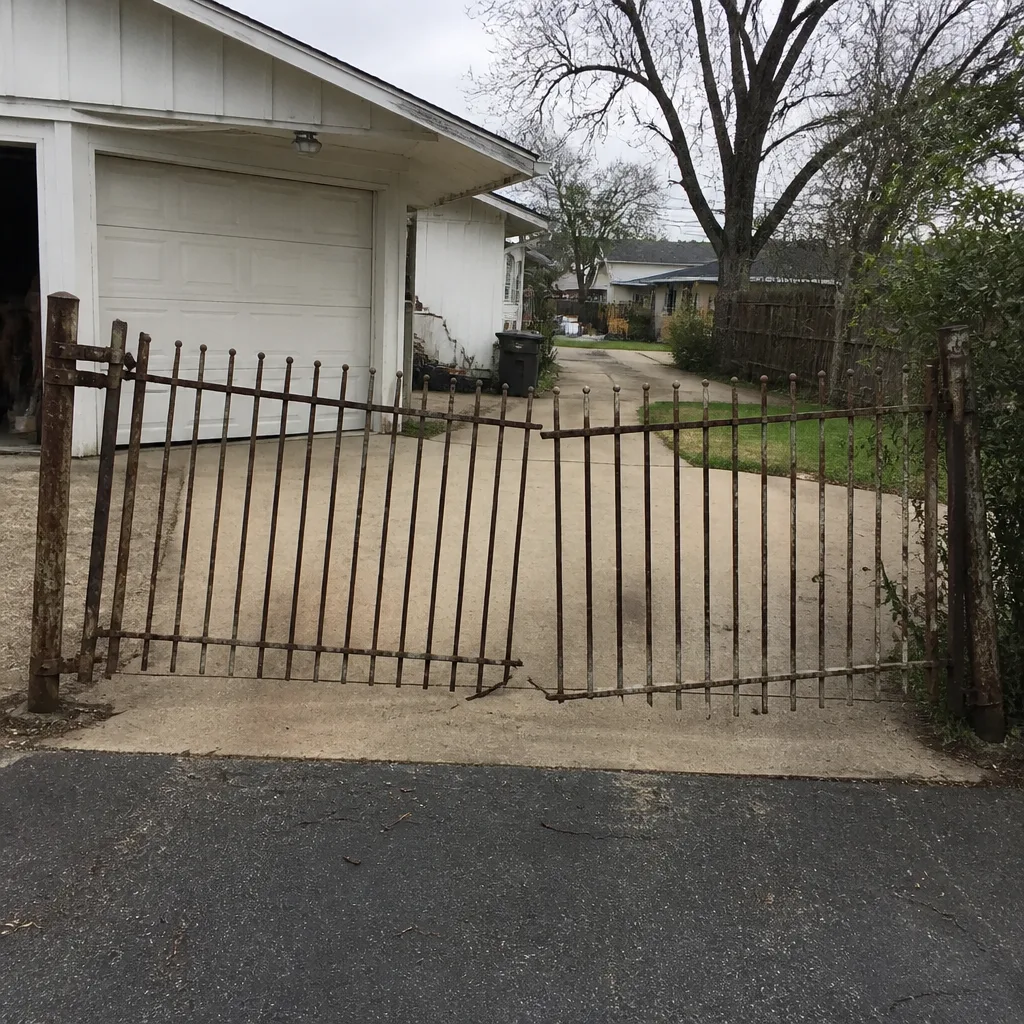
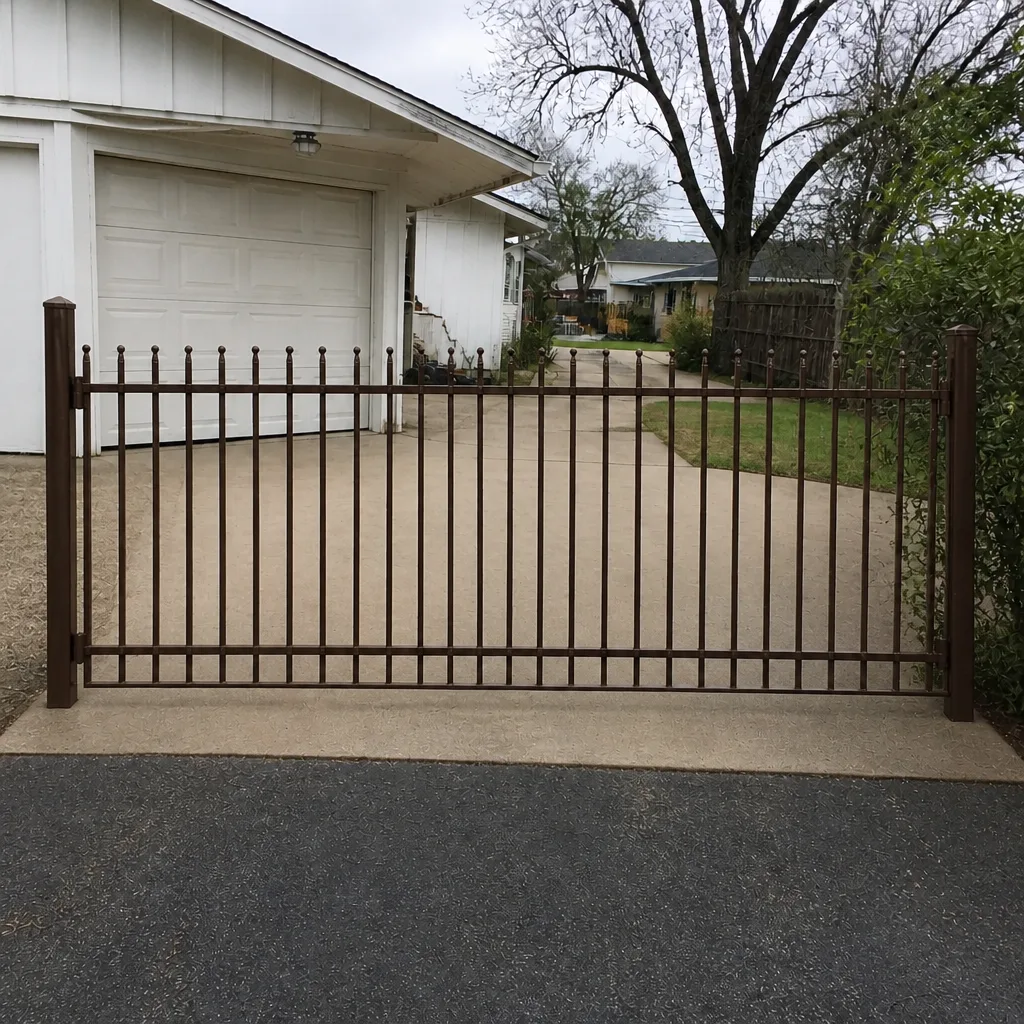
See the difference
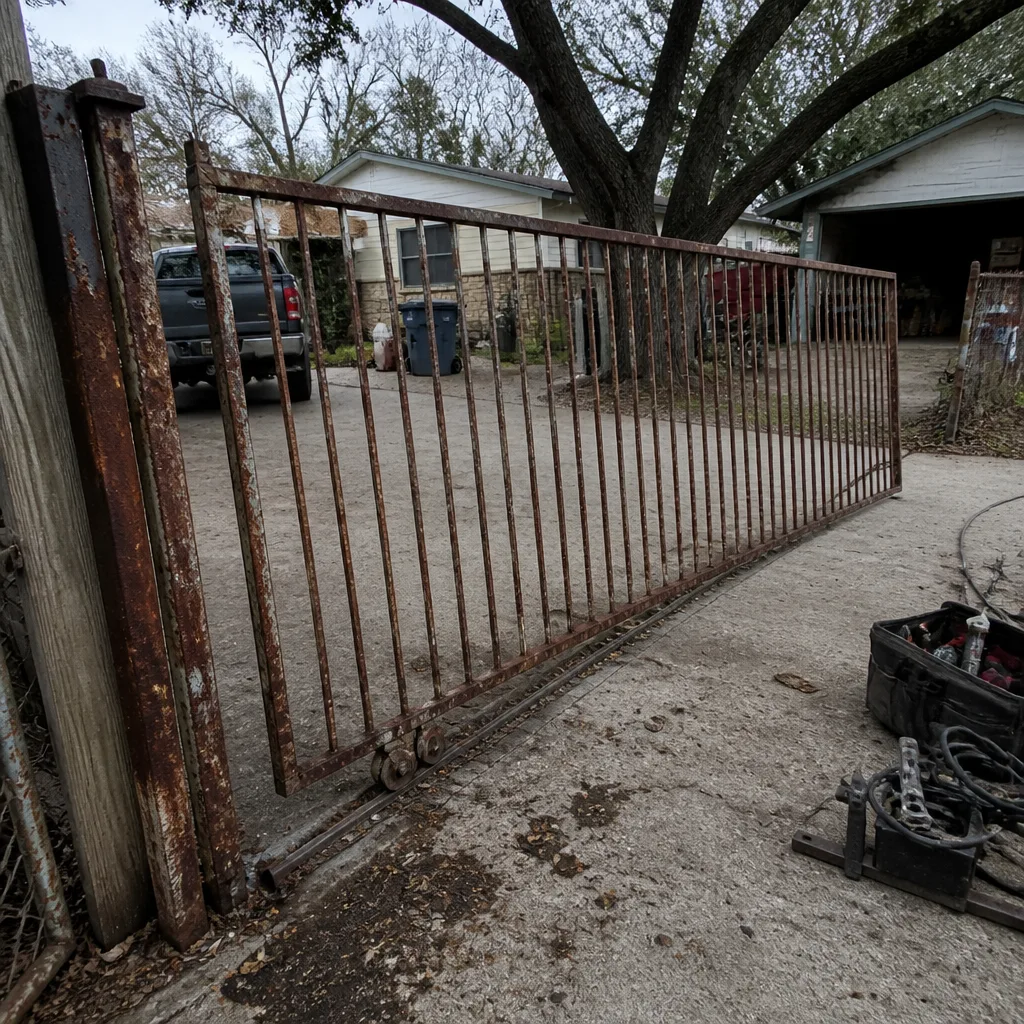 Before
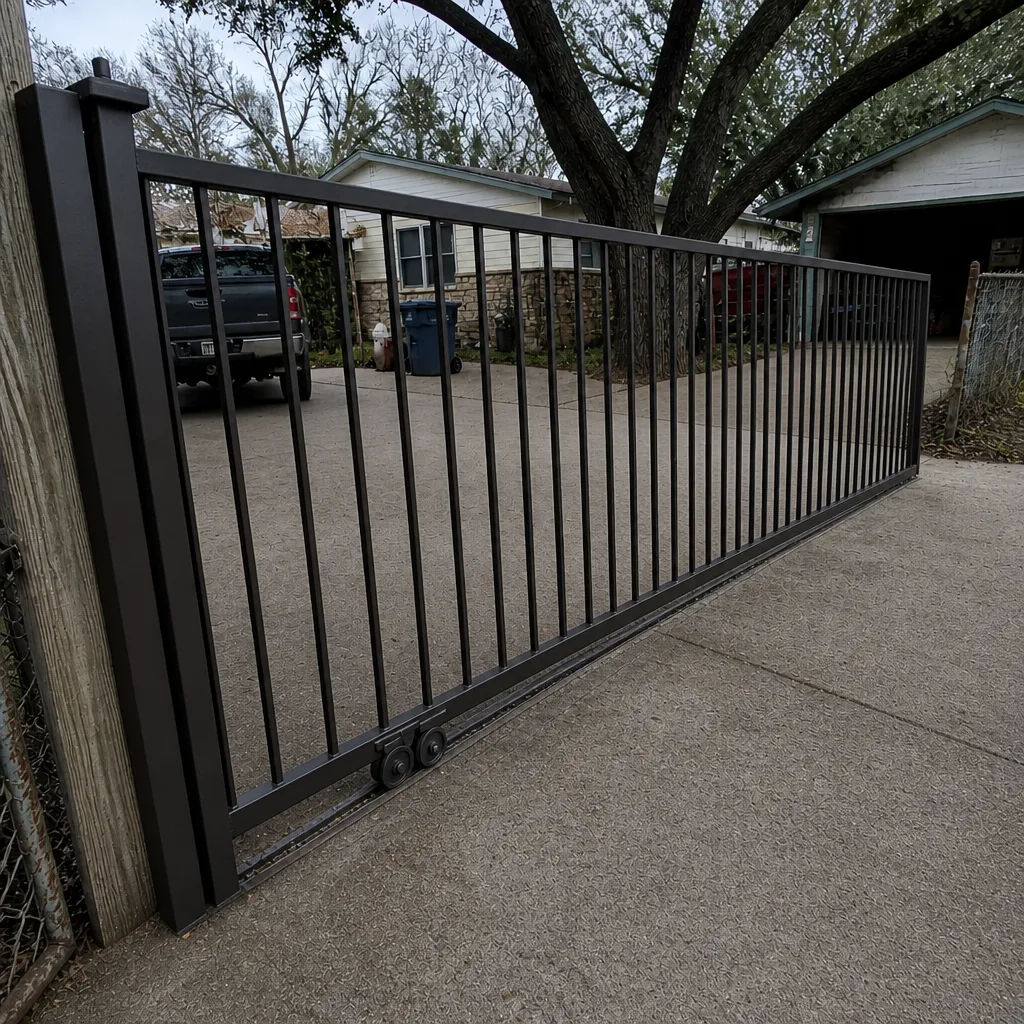 After
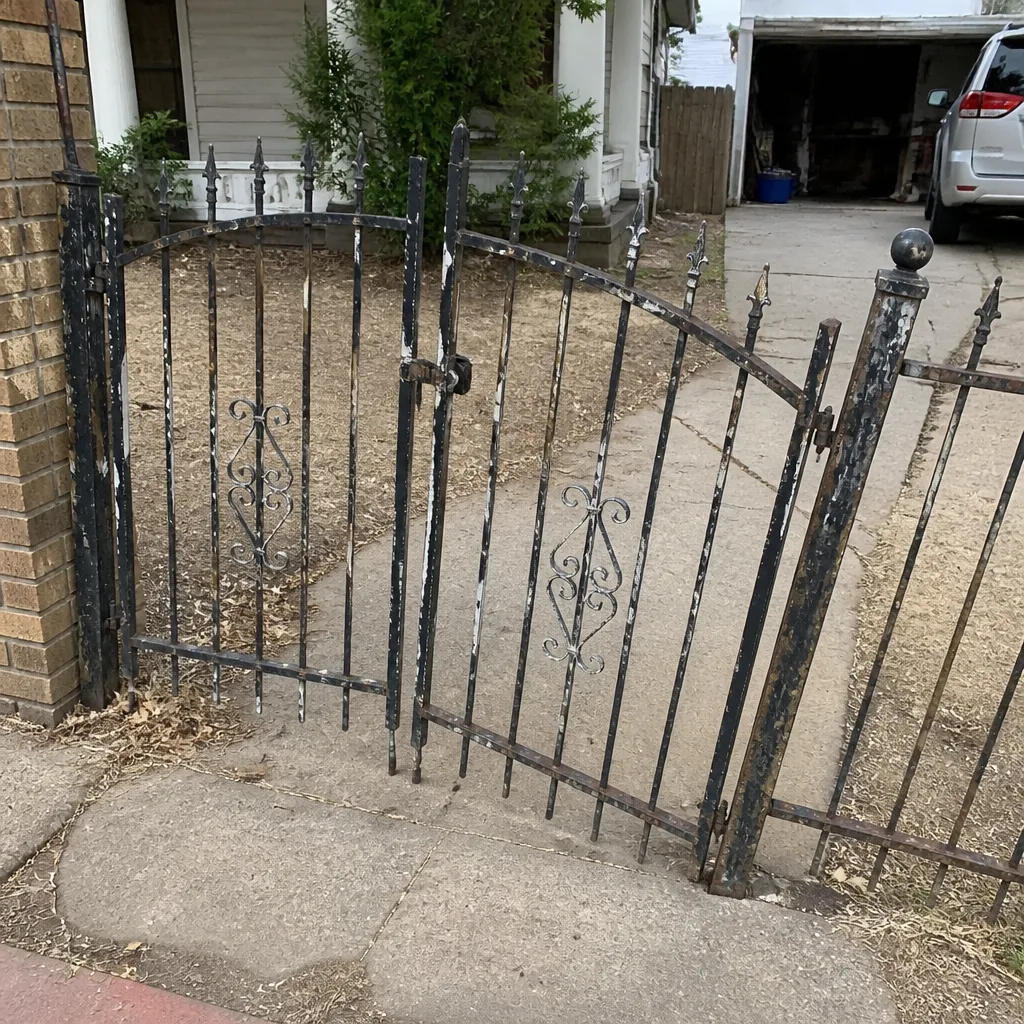 Before
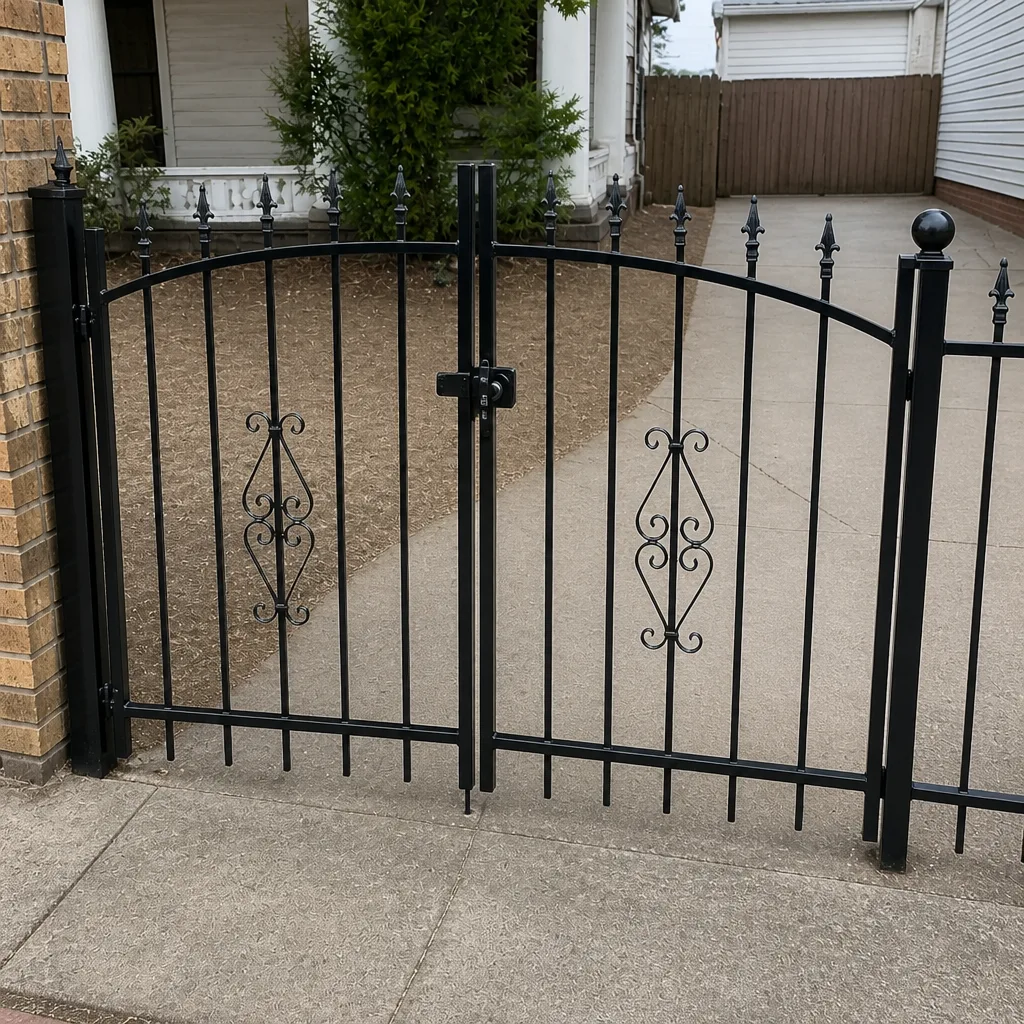 After
 Before
 After
When to Call a Professional
Call a professional if the gate fails to reverse on an obstruction, if grinding has started or escalated, if the operator beeps with a code you can’t identify, or if any post shows movement when you press on it. If you’re not sure whether the fault is in the operator or the gate, the manual-release test above will tell you in under five minutes, and that answer makes the repair call faster and cheaper. Gate Repair Waco offers free estimates in Waco. Call (855) 638-3208. We answer 24/7. Fast dispatch from 7am to 7pm, Sunday through Friday. The price is quoted and agreed before any work starts, and the written estimate sets the final price.
Frequently Asked Questions
A warning sign means the gate still completes every cycle but with a new symptom: hesitation, a new sound, an occasional beep. A failure means the gate no longer completes a full open or close, or it moves unpredictably. If it’s a warning sign, schedule a repair. If it’s a failure or anything involving the safety reversal, stop using the gate and call (855) 638-3208. Estimates are free.
That’s a diagnostic code. On most residential operators the beep pattern is a specific fault signal, usually pointing to the control board, a limit switch, or a sensor the operator doesn’t trust. Write down the beep rhythm or take a short video of it before you call; a trained technician can narrow the fault from that alone.
Grinding on a gate is mechanical: worn rollers, dry hinges, a track issue, or debris in the path of a slide gate. In Waco it’s often compounded by clay soil movement, which shifts gate posts and re-loads the hinge side. If the grinding started suddenly or is accompanied by a partial stop, treat it as a stop-using-the-gate sign and call (855) 638-3208.
Yes. A gate can open and close every cycle and still fail the safety reversal test, which means the photo-eye or safety edge is compromised even though the gate “works.” Test your gate with an obstacle in the safety zone; if it doesn’t reverse, stop using it and call a technician. This is a serious safety issue, not a convenience problem.
A gate specialist is faster and more accurate here. Generalist contractors typically handle gates as one of many trades, so brand-level familiarity with FAAC, BFT, DoorKing, Linear, and the other six brands we work on is unusual. The symptoms we describe in this guide map cleanly to a specialist’s diagnostic sequence, which is why we recommend one for anything beyond the manual-release test.
Possibly. If your Waco properties share the same clay soil and the same general post-set era, the same seasonal movement can affect both. If your gate is working but a gate in the same area has started binding, it’s worth a quick post-rock test on yours and a look at the latch and travel clearance.
The Bottom Line
Gate failures almost never happen without warning. Hesitation, reversal, grinding, partway stops, and beeping are each pointing at a specific component, and the difference between the $200 repair and the $2,000 one usually comes down to whether the symptom was acted on early. In Waco, clay soil and seasonal ground movement add a silent failure mode that shows up in post movement long before it shows up in the operator. Do the manual-release test, take a 30-second video, sort the symptom into “schedule a repair” or “stop using the gate now,” and you’ll get the right diagnosis on the first visit. If it’s time to look at the gate in person, our team covers Waco and the surrounding area, and a technician who spends every field day on gates will know what to look for.
Call (855) 638-3208 for a free estimate. We answer 24/7. Fast dispatch from 7am to 7pm, Sunday through Friday. The price is quoted and agreed before any work starts, and the written estimate sets the final price.
Written by the team at Gate Repair Waco, serving Waco since 2018.