
Last updated November 14, 2026
 Wrought iron
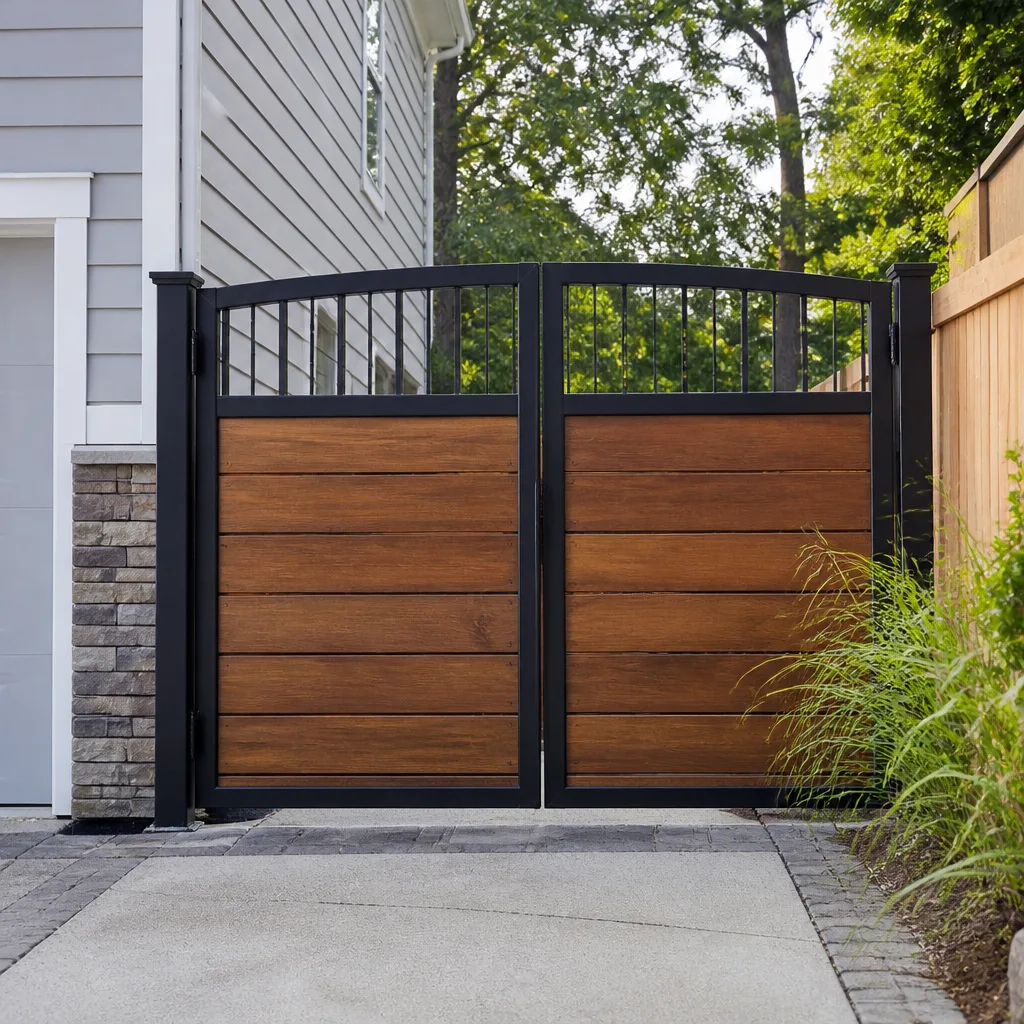 Wood & steel frame
 Farm & ranch
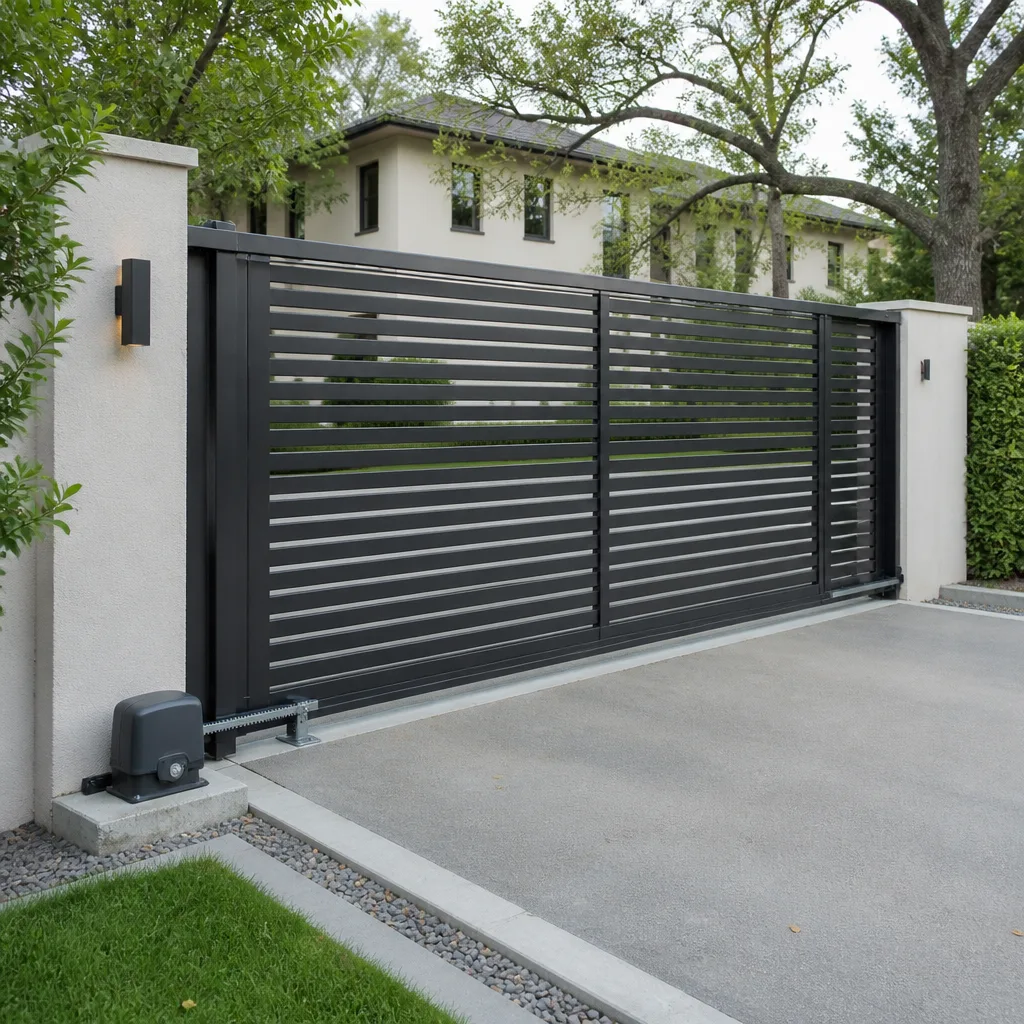 Sliding driveway gates
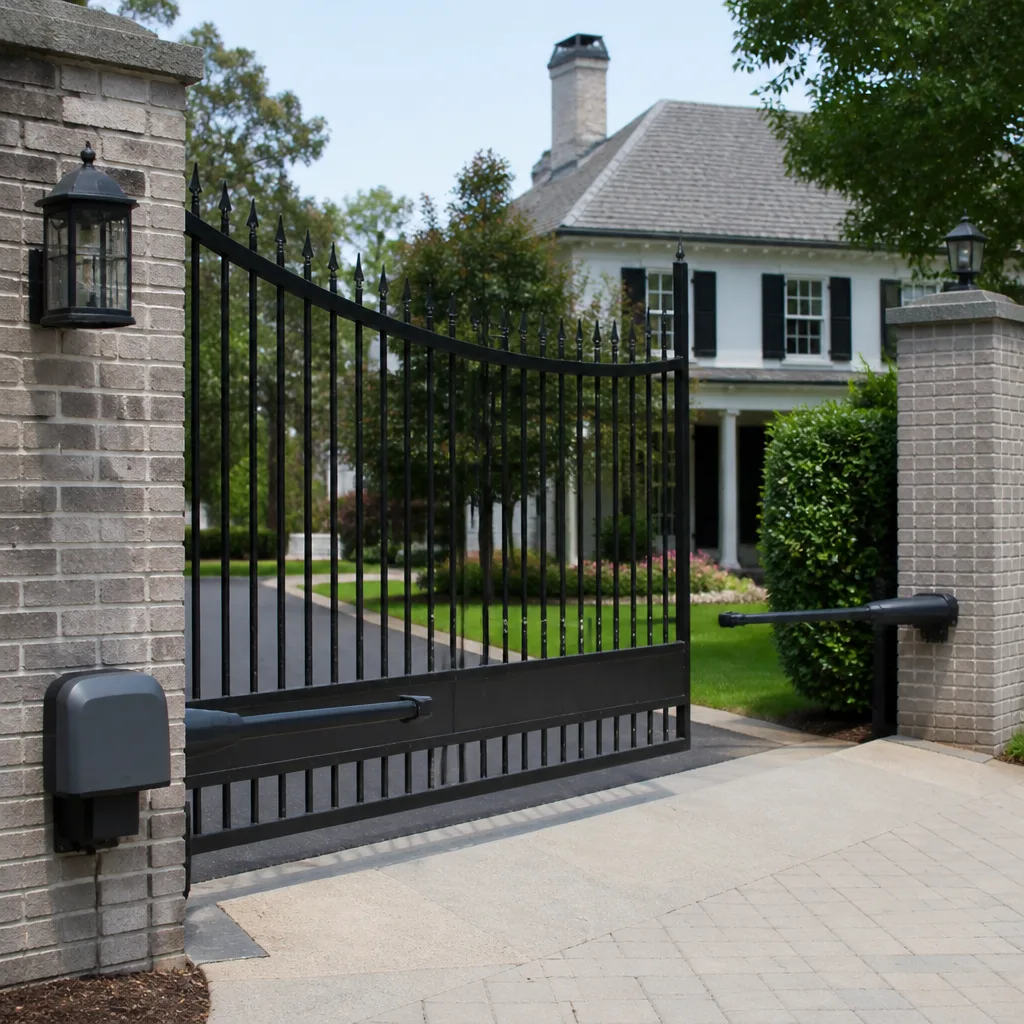 LiftMaster operators
Free on-site gate assessment - hinges, posts, and your LiftMaster or Nice gate operator checked before anything is quoted
The assessment is free and the quote is the invoice.
Get your free estimateDIY vs Professional Gate Repair: The Waco Homeowner’s Decision Guide
Most gate repair advice online gets the question wrong. It asks whether you’re handy enough to fix your gate, when the real question is which layer of the system the problem lives in. A sticky latch and a misprogrammed logic board are not the same kind of job, and treating them the same is how a $200 control board repair turns into a full operator replacement. We’re gate specialists in Waco, and we’d rather you understand the difference than guess at it. This guide walks through what’s genuinely safe to handle yourself, what isn’t, and how to do the diagnostic work that saves you money without taking on the repair risk.
Quick Answer
Mechanical work on a gate – lubrication, remote syncing, the manual release, minor hinge adjustment – is genuinely homeowner-accessible. Anything touching the operator’s wiring, the control board, or the structural posts is not. Gate operators differ from garage door openers in ways that make cross-applied tutorials dangerous, and in Texas a self-repaired access gate that later injures someone becomes your liability. Diagnose what you can, then hand off the electrical and structural work.
Styles & brands we work with
- Wrought iron
- Wood & steel frame
- Farm & ranch
- Sliding driveway gates
- LiftMaster operators
Table of Contents
- The Decision Matrix: What’s Safe DIY and What Isn’t
- Why Gate Operators Are Not Garage Door Openers
- Texas Liability and the Self-Repaired Gate
- How to Diagnose Your Own Gate Before You Call
- The Tools and Knowledge Gaps That Separate a Fix From the Next Failure
- Mechanical Adjustments You Can Handle
- Electrical and Operator Work: Why We Say No to DIY Here
- Repair or Replace: The Honest Threshold
The Decision Matrix: What’s Safe DIY and What Isn’t
Here’s the direct answer: the dividing line isn’t confidence or tool ownership, it’s whether the task touches the electrical circuit or the structural anchoring. Line up a gate problem against that test and most of the confusion disappears.
Safe to handle yourself:
- Lubrication of hinges, rollers, and the gate track
- Syncing a new remote to an existing operator, within the manufacturer’s instructions
- Using the manual release key to open the gate during a power outage
- Clearing debris from the track and the photo-eye lenses
- Minor alignment tweaks on a swing gate hinge
- Replacing batteries in remotes and keypads
- Wiping down sensors so they can actually see each other
Not safe to handle yourself:
- Any wiring between the operator and the power source
- Control board programming or replacement
- Repairing or replacing a structural post
- Adjusting the force or travel limits on an operator you don’t fully understand
- Slide gate track or roller replacement where the gate must be lifted
- Sensor and safety-edge wiring
- Anything requiring the gate to be locked open while you reach into the operator housing
The middle ground is where most Waco homeowners get stuck: a swing gate that drags, or a remote that only works from one angle. Those often start as mechanical issues and end as mechanical issues, but only if you inspect the hinge and track first. If lubricating and clearing the track doesn’t explain the drag, you’re likely looking at a post that has shifted or an operator that’s out of calibration, and both of those need a technician’s eyes.
If you’re already at the point where the gate won’t respond and you’re not sure which layer is failing, Gate Repair Waco can walk through the symptom with you on the phone. That’s free and it often saves a visit entirely.
Why Gate Operators Are Not Garage Door Openers
A gate operator and a garage door opener are cousins, not twins. They share some brand names and some terminology, but their firmware, safety logic, and force limits are built for different loads and different entrapment risks. Reprogramming a LiftMaster gate operator using a tutorial written for a residential garage door unit is one of the most reliable ways to turn a control board repair into a full replacement. The housing looks similar. The behavior inside is not.
Four things make gate operators their own category:
- Safety devices are wired differently. A driveway gate’s photo eyes, safety edges, and loop detectors talk to the operator through its own accessory inputs. A garage door’s reversing system sits on a different logic path. Copying the wrong procedure can leave a gate that closes on a car, a pet, or a person.
- Duty cycle matters. A garage door opener runs a few times a day. A commercial gate operator at a multi-unit entrance might run hundreds of times. Adjusting force limits on a gate without understanding its duty rating can overheat the motor or stall it mid-cycle.
- Travel limits are set by hand. Gate operators open and close to physical limits set during installation. Get those wrong and the gate rams a stop post or fails to latch. Garage door openers typically learn their travel electronically.
- Power is often 230V or higher on commercial units. Residential garage doors run on 120V. Commercial gate operators, including units we service from FAAC, BFT, and DoorKing, frequently run on higher voltage. That’s not a circuit a homeowner should be opening.
The result is that gate tutorials floating around online are often a near-miss. That’s worse than a total miss, because it gives the reader just enough confidence to crack open a housing they shouldn’t. In our experience, the closest calls happen when the tutorial’s first three steps seem to work.
If you’re working with an electric gate repair issue you can’t place, keep the operator housing closed and call us. Even describing the LED pattern on the board helps us narrow down whether it’s a sensor fault, a board fault, or a power issue.
Texas Liability and the Self-Repaired Gate
This is the section most homeowners skip, and it’s the one most likely to matter down the road. In Texas, an automated gate on private property is an attractive nuisance risk. If a gate you repaired yourself later injures a delivery driver, a neighbor, or a child, the fact that you did the repair is not neutral. It can shift responsibility onto you in ways a licensed, insured repair cannot.
A few practical realities:
- Homeowner insurance may not cover a self-repaired gate failure. Most policies distinguish between wear-and-tear failures on maintained equipment and failures traceable to improper modification. If the adjuster asks who did the last repair and the answer is “I did,” the claim gets harder.
- HOA and community rules often require professional work. Many Waco neighborhoods that share an automated entrance have governing documents requiring licensed and insured service on shared gate assets. A self-repair on a shared gate can put you on the wrong side of those rules regardless of outcome.
- Safety devices have to work after the repair. A gate that closes without a working safety edge or photo eye is an entrapment hazard. That requirement doesn’t care who did the work; it cares about the result.
- Commercial sites carry more exposure. A property manager overseeing a facility entrance is not a homeowner – they’re a business operator with premises liability. That raises the stakes substantially on self-repair decisions, and most of the managers we work with treat automated access as a professional-maintenance item by default.
None of this is meant to scare anyone off a hinge adjustment. It’s meant to frame the decision honestly. Small mechanical fixes done carefully are low risk. Wiring an operator, adjusting force limits, or replacing structural anchors without proper training is not, and the liability question follows you for years.
How to Diagnose Your Own Gate Before You Call
Here’s where self-repair advice usually fails: it jumps straight to the fix and skips the diagnosis. In our experience, the technical conversation that saves the most money is the one where the caller describes the symptom precisely. You can do the first step of that yourself. Everything below is observation only – no opening the operator housing.
- Watch the full cycle. Open the gate manually and watch. Does it drag in one spot? Does it stop short? Does it drift back after reaching the open position? Note the point in the travel where the behavior changes.
- Check the photo eyes by hand. Look at the small lenses on each side of the driveway opening. Wipe them. Look for spider webs, dirt, or a lens knocked slightly out of alignment. If the gate closes and immediately reverses, this is the first place to look.
- Test the remotes and keypad separately. Does the gate respond from one remote but not another? From the keypad but not the car? That tells us whether it’s a remote issue, a receiver issue, or a logic issue.
- Check the manual release. Confirm the manual release key works and the gate moves freely by hand once released. If it doesn’t move freely, the mechanical side needs attention first.
- Listen at startup. A healthy operator runs a consistent sound. A click without movement, a hum without movement, or a beep pattern can point to a board or motor fault before the technician arrives.
- Write down the brand and model. LiftMaster, Elite, Viking, and Ghost Controls all have distinct diagnostic LED patterns. Knowing what you’re looking at turns a 30-minute exploration into a 5-minute diagnosis.
If you’re in Waco and you’ve done those six steps, you’re ready for a much more useful phone call than “my gate is broken.” That alone can shorten the visit and keep the conversation on the right layer of the system.
The Tools and Knowledge Gaps That Separate a Fix From the Next Failure
Some Waco homeowners have a full workshop and can rebuild a fence line without thinking twice. That’s real ability. But gate work has a short list of tools and knowledge areas that don’t transfer from general carpentry, and missing one of them is how a fix creates the next failure.
Tools you’ll need:
- An accurate digital multimeter – not a $15 unit that drifts on 230V readings
- Torque wrench for structural post bolts, with the operator’s specified values
- Manufacturer-specific programming tools or hand-held controllers for board-level adjustments
- Hydraulic gauges for FAAC and BFT arm-based operators
- Insulated hand tools rated for the voltages involved
Knowledge areas you’ll need:
- The operator’s specific safety logic and how each accessory input behaves
- Proper travel-limit setting for the specific gate weight and length
- Whether your gate uses loops, photo eyes, safety edges, or a combination, and how those interact when one fails
- How the operator’s force curve is matched to the gate’s mechanical resistance
- Which components are load-bearing on the post anchoring, and what correct torque and tension look like
The gap that matters most is the third one. Most DIY gate problems aren’t caused by a wrong fix – they’re caused by a fix that ignored an interaction. Adjusting force limits to push through a sticking hinge feels like progress, and the gate does open. But the operator is now masking a mechanical fault that will grind down the motor over months, and the safety edge may be overridden in the process. That’s the wrong fix that creates the next failure.
If you’re uncertain which gap you’re looking at, we’ve written about gate repair in more depth, including what a technician actually checks when they arrive.
Mechanical Adjustments You Can Handle
The mechanical side of gate maintenance is where DIY makes genuine sense. These are tasks that don’t touch the operator’s circuit and don’t create liability if done carefully. A few that we’d encourage any Waco homeowner to handle:
- Lubrication. Hinges, rollers, and slide tracks benefit from regular lubrication. Use a product the gate manufacturer recommends and avoid anything that attracts grit. In Waco’s warm, dusty summers, dry conditions are the norm, so lighter lubricants that don’t collect trail dust work better than heavy grease.
- Remote syncing. Adding a remote to an existing operator is a legitimate homeowner task, and the operator manual covers it for most brands we work with, including Elite and Ghost Controls. Do it exactly as written. If the manual isn’t clear, don’t improvise.
- Manual release operation. Every automated gate has a manual release. Learn where the key goes and practice using it once before you need it during a power outage.
- Photo eye cleaning. Wipe the sensor lenses with a soft cloth and check for spider webs. This one task resolves a surprising share of “my gate won’t close” calls we get in Waco.
- Minor hinge adjustment. A swing gate that drags slightly at the latch can often be corrected with a small hinge tweak. If the adjustment requires moving the post, stop.
Notice what’s not on this list: anything adjusting the travel limits or force settings. Once you turn those dials, you’ve moved from maintenance into calibration, and calibration is the start of the electrical side of the gate.
Electrical and Operator Work: Why We Say No to DIY Here
We want to be direct about this. Electric gate work is not a “be careful and use insulated gloves” job. The wiring at the operator, the safety sensors, the loop detectors, and the access hardware all carry real shock risk and real liability risk, and they interact in ways that aren’t visible from a tutorial.
A partial list of what’s electric-side:
- The power run from the breaker panel or a dedicated circuit to the operator
- Low-voltage control wiring between the operator and every accessory
- The control board itself, including programming, board replacement, and firmware-specific setup
- Safety edges and loop detectors on commercial gates
- Access hardware – keypads, card readers, intercoms – and how they hand off to the operator
- Battery backup systems on operators that have them
This is the layer where every brand we service has its own quirks. DoorKing units we service behave differently from FAAC and BFT units, and a Ghost Controls board doesn’t accept the same programming commands as a Viking board. A general handyman with a multimeter can usually identify that there’s a fault somewhere. Only someone who works on your specific brand regularly can identify which component is at fault and what the correct replacement is.
There’s a broader safety point too. An automated gate is a heavy moving object. If a gate is being serviced while someone is holding the safety circuit open in a way the operator doesn’t recognize, the gate can close on a person. Trained technicians treat this as a live hazard every time they open the housing. Homeowners shouldn’t have to.
We offer free estimates for Waco homeowners so the electric-side conversation starts with clarity, not fear.
Repair or Replace: The Honest Threshold
This is the second question that follows the first, and it deserves a straight answer. A repair makes sense when the failing component is a known part on a sound operator. A replacement makes sense when the operator itself is at or past its service life, or when repeated repairs are pointing to a system that’s no longer reliable.
Signals pointing toward repair:
- The gate cycles correctly when it works, and one specific component has failed
- The operator is a recent model, and parts and boards are still available
- The mechanical gate itself is structurally sound
- One failure in a long period of steady operation
Signals pointing toward replacement:
- Repeated failures in a short window, especially on the control board
- An operator past its service life where parts, boards, or accessories are hard to source
- Safety accessories that no longer interface correctly with the operator
- A commercial gate at a multi-tenant site where reliability matters more than per-visit cost
- An operator that’s been repaired with unapproved parts that no longer meet the gate’s needs
Replacement makes practical sense at the same moment a failing operator becomes a security gap at a shared entrance, or a liability at a facility. The right call isn’t always the cheaper one. It’s the one that gets the gate to a state where you stop thinking about it.
Common Mistakes to Avoid
- Applying a garage door tutorial to a gate operator. The housing looks similar and the firmware behaves differently. Cross-applied instructions are the most common way we see a control board repair escalate.
- Adjusting force limits to push through a mechanical fault. The gate opens, but the motor now fights a problem it can’t win. The failure just relocates to a more expensive component.
- Skipping the photo eye check because “it can’t be that simple.” In Waco, spider webs and trail dust on the sensor lenses cause a lot of close-and-reverse behavior. Clean them before assuming the board is at fault.
- Setting travel limits without knowing the gate’s weight. Over-travel rams the stop post. Under-travel leaves the gate unlatched. Neither is visible until the gate is under load, and by then the mechanism is wearing.
- Assuming a shared-entrance gate is the homeowner’s responsibility. In HOA-governed Waco neighborhoods, shared gate assets usually fall under community rules, and self-repair on those assets can violate the governing documents.
- Replacing the operator without inspecting the mechanical gate first. A new operator on a gate with a dragging hinge or a shifted post will fail the same way the old one did.
- Ordering board or motor parts based on brand alone. LiftMaster alone has multiple operator families with different boards. Model-specific parts, not brand-specific parts, are what keep the gate running.
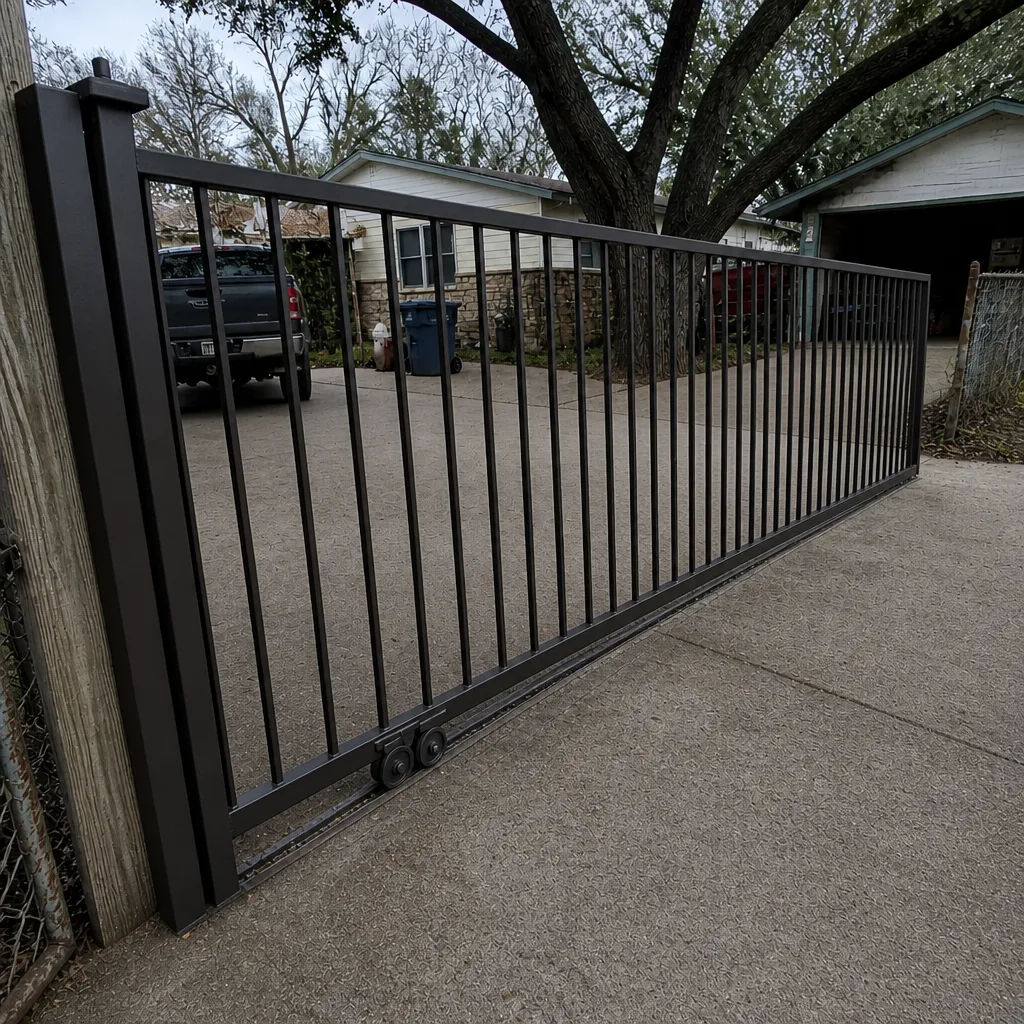
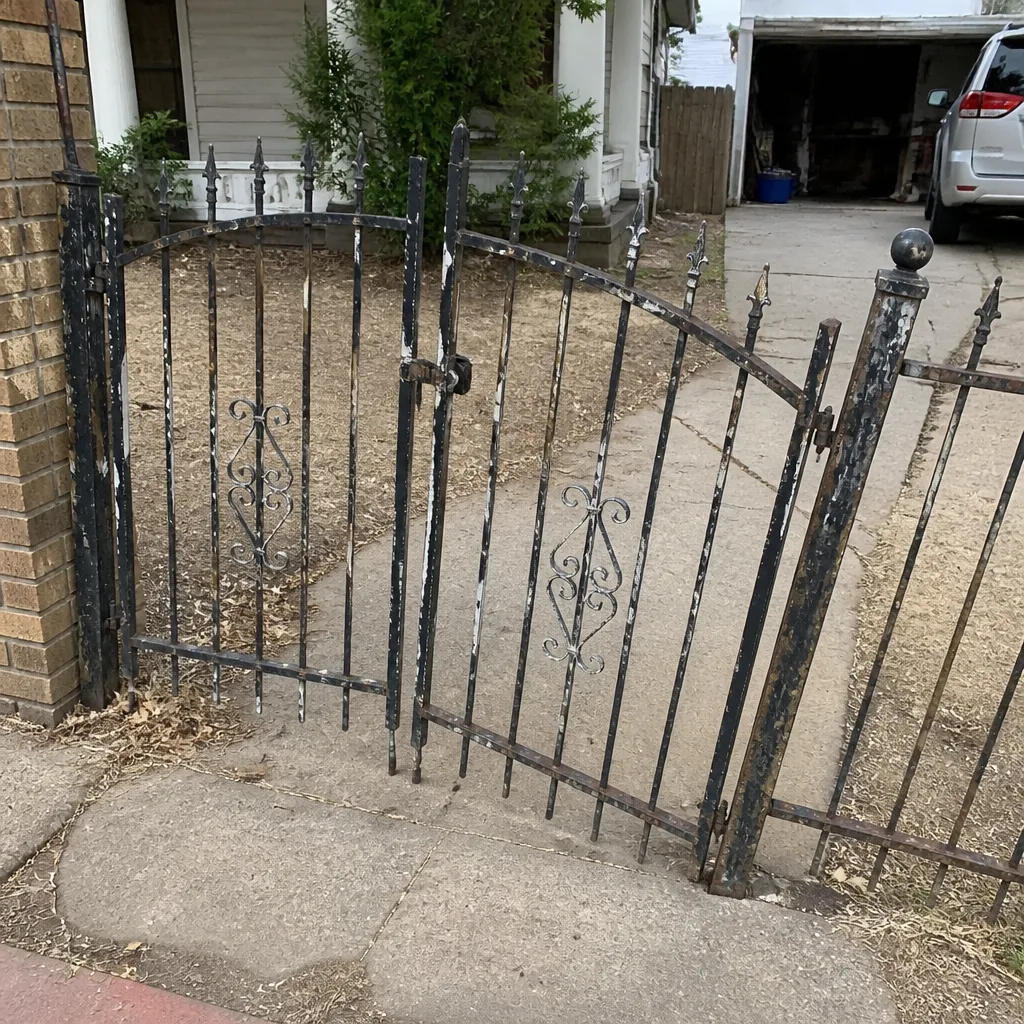
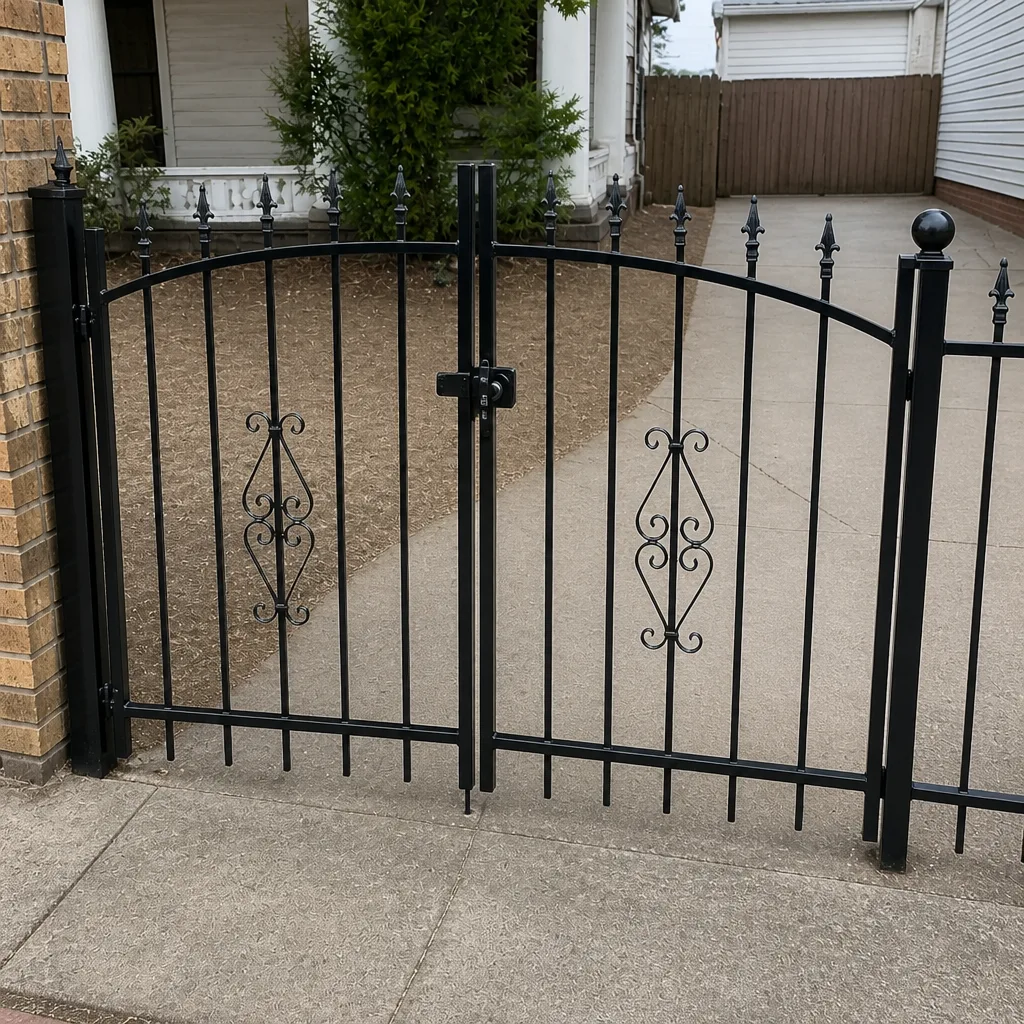
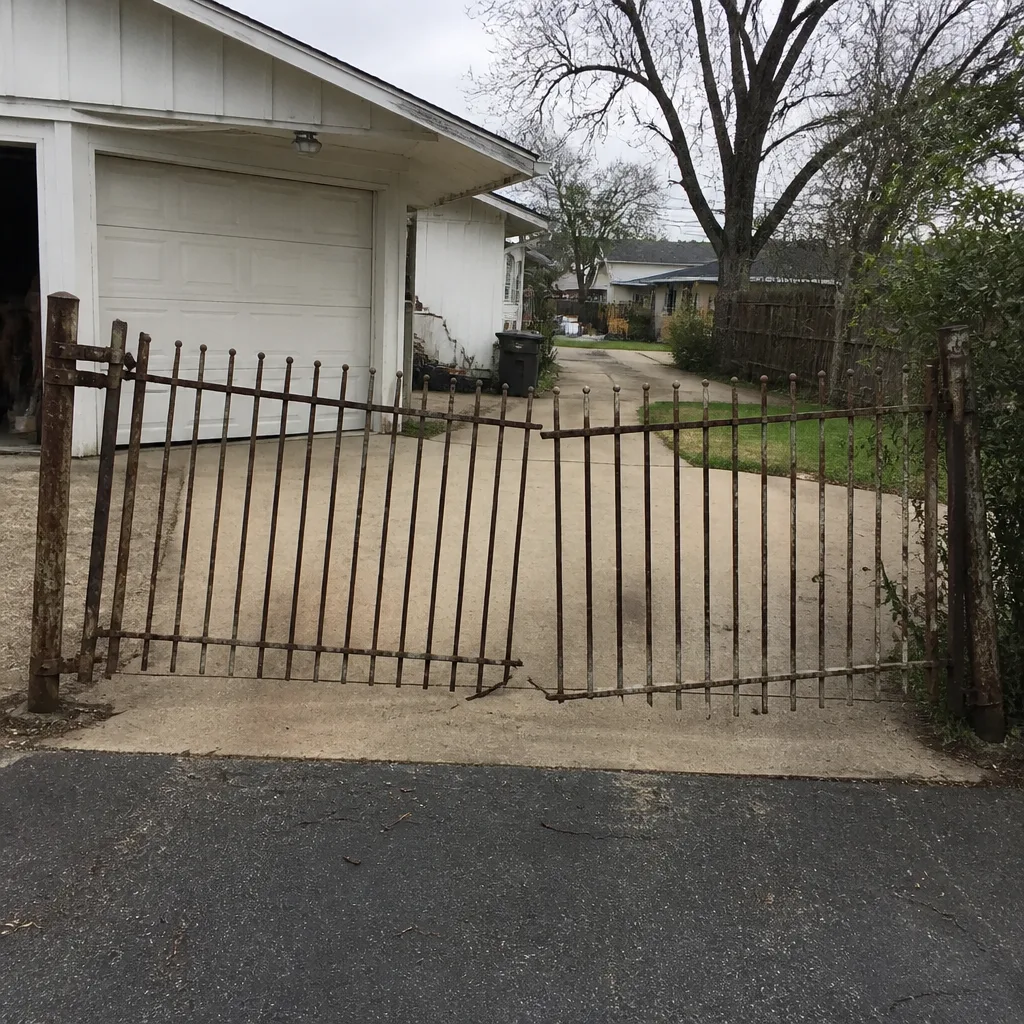
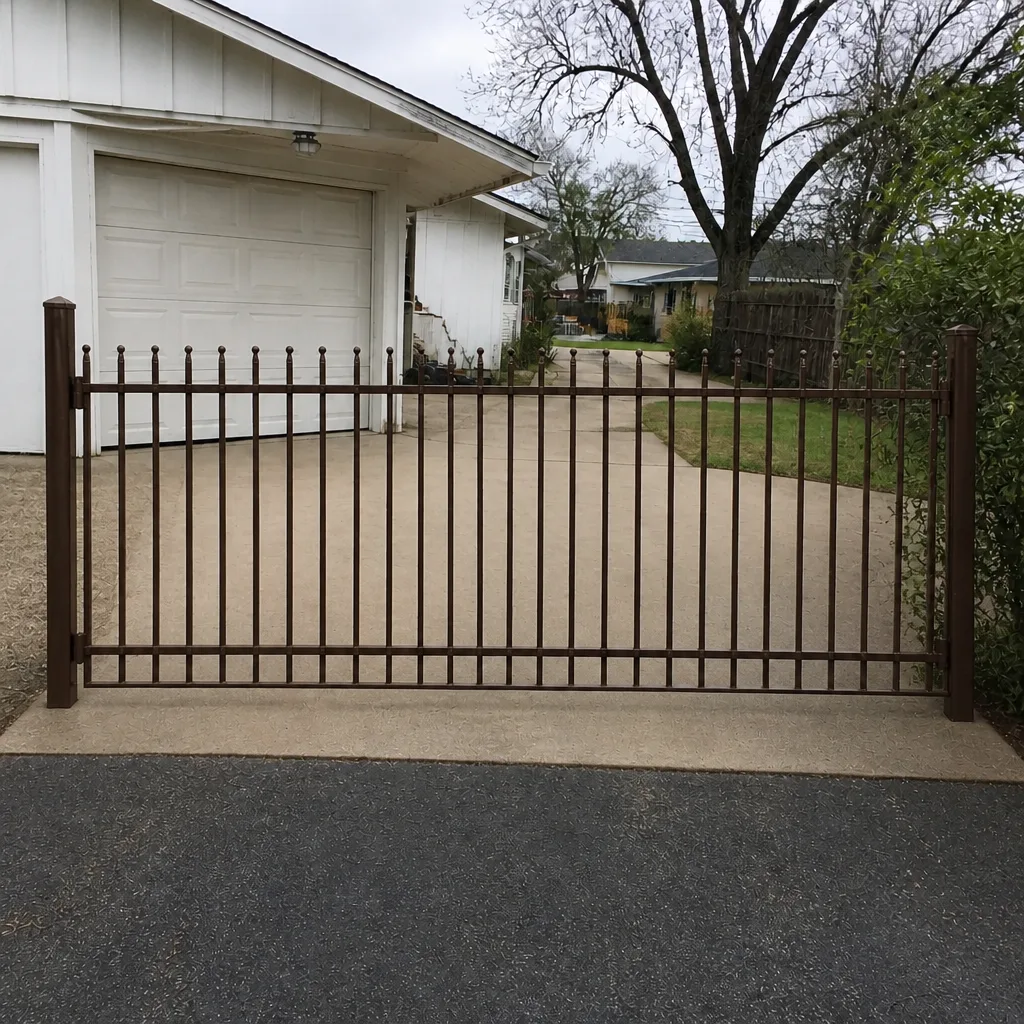
See the difference
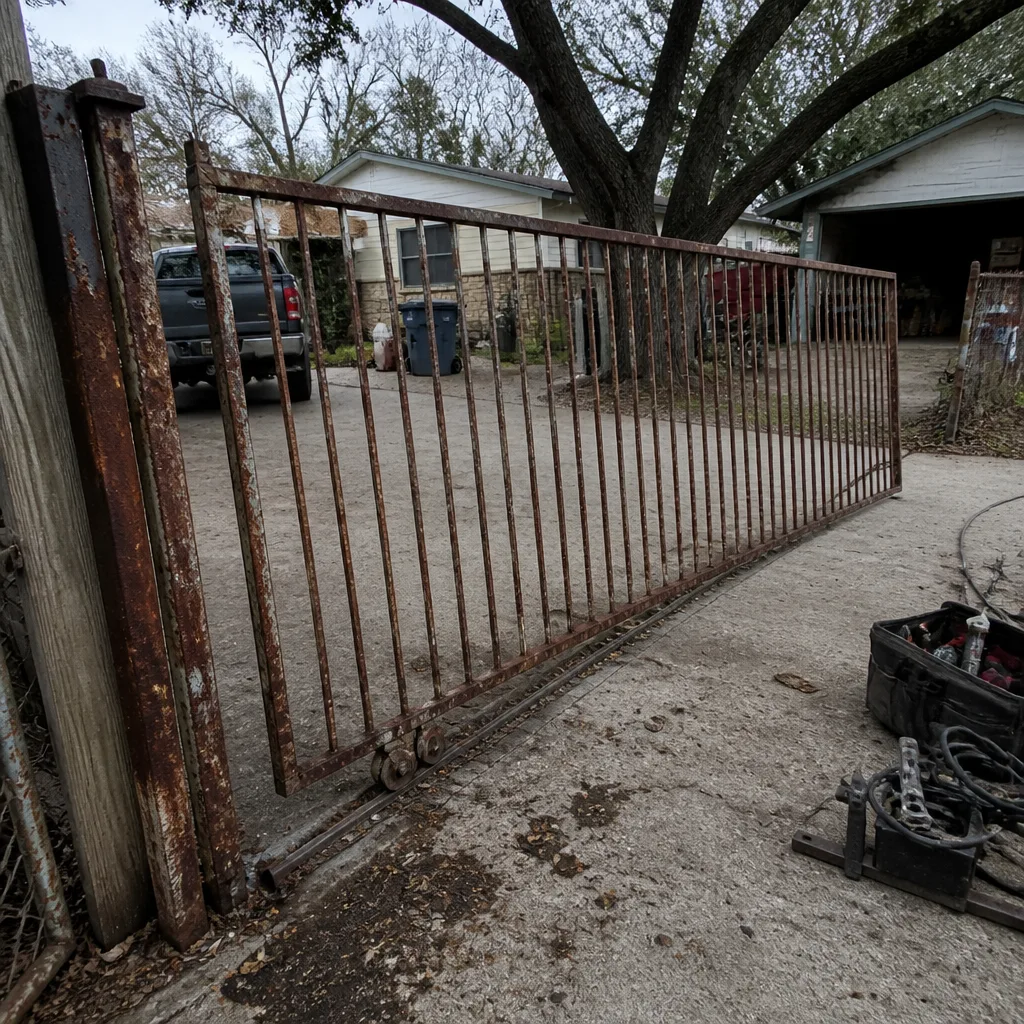 Before
 After
 Before
 After
 Before
 After
When to Call a Professional
Call a professional the moment the problem moves past lubrication, remote syncing, and photo eye cleaning. That includes anything electrical, any failure that repeats, any structural post concern, and any situation where the gate doesn’t respond at all or responds unpredictably. It also includes any commercial gate, because liability on a shared entrance is defined differently than liability on a private driveway.
The gate operator itself is always a call. Even a sensor that looks like it just needs a wipe can be masking a deeper fault in the safety loop, and tracing that by trial and error is how a $200 job becomes a $600 one. We’d rather you call early than wait for the symptoms to multiply.
Gate Repair Waco offers free estimates in Waco. Call (855) 638-3208. We answer 24/7, with fast dispatch from 7am to 7pm, Sunday through Friday. On the estimate visit, we’ll tell you which layer the problem lives in and whether repair or replacement makes more sense – no upsell.
Frequently Asked Questions
No, gate operator work is not a safe DIY task for homeowners. Gate operators involve higher voltages than residential garage openers, safety devices wired into the operator’s accessory inputs, and force and travel settings that affect entrapment risk. Repairing a hinge or syncing a remote is fine; opening the operator housing is not.
Yes, syncing a remote to an operator you already own is a homeowner task for most brands. Follow the operator manual exactly for your model, and don’t improvise if the steps are unclear. If the new remote won’t sync after following the manual, the receiver or board likely has a fault and it’s time to call.
A gate that closes and reopens is usually reacting to a blocked or misaligned photo eye, a safety edge sensing an obstruction, or a loop detector that’s triggering incorrectly. Clean and check the photo eyes first. If that doesn’t fix it, the safety circuit needs a technician.
No, adjusting force settings to push through a mechanical drag treats the symptom, not the cause. The gate will open, but the motor now fights a problem it can’t fix and wears faster. Fix the mechanical drag first, then confirm the force settings are correct.
Repair the operator when a known component has failed on a sound system with parts still available. Replace when the operator is past its service life, when failures repeat in a short window, or when the safety accessories no longer interface correctly. A free estimate lets a technician tell you which path is honest for your gate.
Yes, we service both single-family driveway gates and multi-unit community and facility entrances. We work on 9 gate brands spanning both residential and commercial systems, including LiftMaster, FAAC, BFT, Linear, Viking, Ghost Controls, DoorKing, Elite, and Mighty Mule. If you’d like to know whether your specific unit is in that roster, call (855) 638-3208 – estimates are free.
The Bottom Line
The DIY-versus-pro question for gate repair comes down to which layer of the system the problem lives in. Mechanical maintenance – lubrication, photo eye cleaning, remote syncing, manual release operation, minor hinge adjustment – is genuinely homeowner work. Anything touching the operator’s wiring, control board, travel limits, force settings, safety devices, or structural posts is not, and in Texas the liability for a self-repaired access gate can follow you for years after the fact. Diagnose what you can. Hand off the rest.
If you’ve done the observation and you’re not sure which layer you’re looking at, that’s the point to call. Call (855) 638-3208 for a free estimate. We answer 24/7, with fast dispatch from 7am to 7pm, Sunday through Friday. A gate specialist arriving on-site spends 100% of their field time on gates, from the motor to the keypad, and we’ll tell you honestly whether repair or replacement makes sense.
Written by the team at Gate Repair Waco, serving Waco since 2018.