
Last updated November 14, 2026
 Wrought iron
 Wood & steel frame
 Farm & ranch
 Sliding driveway gates
 LiftMaster operators
Free on-site gate assessment - hinges, posts, and your LiftMaster or Nice gate operator checked before anything is quoted
The assessment is free and the quote is the invoice.
Get your free estimateGate Repair Maintenance Schedule: What to Do and When
The most common maintenance mistake we see on automated gates around Waco isn’t skipped lubrication. It’s the wrong lubricant. White lithium grease sprayed onto a chain drive in a Central Texas summer turns into a gummy paste that holds grit and grinds the chain faster than running it dry ever would. The second most common mistake is treating every gate the same: a lightly used residential swing gate and a busy commercial slide gate have completely different service rhythms. This guide lays out a maintenance schedule built around gate type, operator brand, actual cycle count, and the specific seasonal stressors we deal with in Waco, so you know exactly what to do and when.
Quick Answer
There is no single correct interval for gate maintenance. A gate schedule should be set by three things: how many cycles the gate runs per day, what type of operator it uses, and the season. In practice, a typical residential driveway gate needs a full inspection once a year with a lubrication check every six months, while a high-traffic commercial entrance should be serviced every 90 days no matter how good it looks. Seasonal tasks specific to Waco are best done in spring (cooling and electrical checks before the heat) and after summer storms (limit switch and sensor realignment).
Styles & brands we work with
- Wrought iron
- Wood & steel frame
- Farm & ranch
- Sliding driveway gates
- LiftMaster operators
Table of Contents
- Cycle Count vs. the Calendar: Which Sets the Schedule
- Waco’s Seasonal Maintenance Calendar
- The Lubrication Matrix: What Goes Where
- Battery Backup Testing for Solar and AC Operators
- Safety Device Checks You Should Never Skip
- How to Log Maintenance So It Actually Helps You
- Brand-Specific Notes: LiftMaster, FAAC, BFT, and Mighty Mule
- What You Can Do Yourself and What You Shouldn’t
Cycle Count vs. the Calendar: Which Sets the Schedule
Cycle count is the real measure of gate wear, and the calendar is only a convenient way to remember to check. A cycle is one full open-and-close. The operator’s internal motor and logic board don’t care whether it’s March or October; they care how many times the gate has traveled. That’s why a commercial gate that opens 200 times a day will show wear months before a residential gate that opens six times a day, even if the residential gate is older.
Most operators and control boards track cycles internally. On a commercial system, the technician who services it can read that count off the board or a connected app. For a residential gate on a LiftMaster or Mighty Mule operator, you can estimate it: count the number of arrivals per day at your household, then double it (each arrival is typically one open and one close). If everyone in the home comes and goes three times a day, that’s about six cycles.
In our experience across Waco, the practical thresholds fall into three groups:
- Low-use residential (under 20 cycles a day): full inspection once a year, lubrication check every six months.
- Mid-use residential or small commercial (20 to 100 cycles a day): full inspection every six months, safety device and battery check every 90 days.
- High-traffic commercial (over 100 cycles a day): full service every 90 days regardless of how the gate looks or sounds. A busy commercial gate that skips a quarter will usually show it in the gearbox or the control board before it shows it in the visible gate.
A gate that “looks fine” is not evidence it is fine. Operators wear internally, and by the time a commercial gate starts making noise or stalling, the wear has often been building for months. The 90-day floor for high-traffic systems isn’t arbitrary; it’s the interval that keeps wear visible before it turns into a failure.
Waco’s Seasonal Maintenance Calendar
Waco summers are hard on gate operators, and the maintenance tasks that matter most fall on either side of them. Mild winters here mean you’re not winterizing against deep freeze, but you are preparing electrical components for months of sustained heat and you are cleaning up after the storm season. Below is a calendar built around that pattern.
Spring (before the summer heat)
- Check the operator’s capacitor and thermal cutout. A capacitor that’s nearing the end of its life in March will fail in July when the operator is working hardest. Testing it in spring catches those.
- Test the operator’s thermal overload protection. Many boards have a thermal cutout that shuts the motor down when it overheats. Verify it’s working before the heat stress begins.
- Clean the control board and enclosure. Dust and pollen accumulate on control boards through the winter, and heat plus debris is what kills electronics.
- Inspect and lubricate the chain or track per the matrix below. Do this before the heat so the lubricant is fresh going into the hardest months.
- Test the battery backup under load. See the battery section for the right way to do this.
Summer (mid-season checks)
- Listen for changes in motor sound. Heat makes a struggling motor louder and slower. Note any change in how the gate moves.
- Check the operator enclosure for overheating. Shade and ventilation matter. If you can comfortably rest your hand inside the enclosure, it’s running within range.
- Clear debris from the track or arm travel path. Summer growth and blown debris are the most common causes of a gate that stops mid-travel in August.
Post-storm (after a big system rolls through)
- Check limit switches. Wind and vibration can shift the physical stops on the gate arm or track. A gate that stops short or overshoots is usually a limit issue, not a motor issue.
- Realign safety sensors. Photo-eye sensors are knocked out of alignment by wind, debris, or a gate settling. If the gate reverses on closing for no clear reason, check the sensor alignment first.
- Inspect posts and hinges for movement. Heavy rain softens soil, and a gate post that shifts a fraction of an inch can throw the entire mechanism out of true.
These post-storm checks are the ones people skip, and they’re the ones that prevent the “gate just stopped working” call a week after a storm. That call is usually not a failed motor. It’s a limit switch or a sensor that moved when the wind hit the gate. When you do need help with an automated system that’s stopped working, we handle electric gate repair as a core service, and diagnosis of these sensor and limit issues is a routine part of it.
The Lubrication Matrix: What Goes on Which Part
The lubricant question is where most gates get damaged, not saved. The wrong product on the wrong component turns a moving part into a grinding one, especially in Central Texas heat. Here’s what we recommend, and why.
Chain drives (slide gates and some swing operators)
Use a dedicated chain lubricant, ideally a dry or wax-based type designed for exposed chains. These penetrate the links and then set dry, so grit doesn’t stick. Never use white lithium grease on a chain in this climate. In sustained heat it softens, becomes tacky, and grabs every bit of dust and grit the gate picks up. That turns into an abrasive paste that wears the chain and sprocket faster than a dry chain would ever wear. Reapply a light coat every six months for residential, every 90 days for commercial.
Swing gate arms and hinges
Use a heavier grease at the hinge pins on swing gates, applied sparingly. Heavy grease belongs on hinge points because they take load and friction, not on chains. For hydraulic swing operators like a FAAC system, use only the hydraulic fluid specified for the unit, and don’t overfill. The reason is simple: these units are designed around a specific fluid viscosity, and using something else changes how the arm moves under load.
Slide gate tracks and rollers
The track itself doesn’t need grease. It needs to be clean. A dry silicone spray on the track and rollers keeps them moving without attracting grit. Greasy tracks collect debris into a hard paste, and that’s what makes a slide gate drag or stop. Clean the track with a stiff brush first, then apply a light silicone spray only if it’s dry and dusty.
Underground operators and buried components
Underground operators are sealed units and don’t need user-side lubrication. What they do need is a check of the access cover and drainage. In Waco, heavy rain can pool water at an underground operator’s access point, and that’s a job for a technician, not a homeowner with a grease gun.
Control boards and electrical enclosures
None of these gets lubricant. What they get is a dry wipe and a check for moisture or corrosion. A control board that’s gotten damp needs to be dried and inspected, not sprayed.
One quick rule of thumb: if a component is exposed to dust and grit, use a dry or wax-based product. If a component takes heavy load and friction, use a proper grease. If a component is sealed, no lubricant at all.
Battery Backup Testing for Solar and AC Operators
Battery backup is the part of an operator that fails silently. A battery can sit for two years, test fine on a voltage meter, and then drop dead the first time it’s actually asked to open the gate. That’s because a voltage test tells you the battery has a charge. It does not tell you the battery can deliver the load the operator needs. Load testing is what actually matters.
Voltage test vs. load test
- Voltage test: a multimeter reads the resting voltage, typically around 12 or 24 volts depending on the system. It tells you the battery is holding some charge. It doesn’t tell you how much capacity is left or whether it can handle the transient load of a motor starting.
- Load test: the operator is cycled on battery power only, with the AC or solar input disconnected, and the gate is run through several full open and close cycles. If the gate slows noticeably or stalls, the battery is weak. This is the real test, and it’s what we run on a maintenance visit.
Doing the load test safely means disconnecting the power input correctly and cycling the gate through enough cycles to show a real weakness. On a LiftMaster operator, this often means running through several cycles and watching the battery indicator light or monitoring the app readout. On a Mighty Mule solar installation, it means covering the solar panel to isolate the battery, then cycling the gate. Either way, the test is meaningful only if you cycle the gate enough to load it.
What the test tells you
If a battery holds a charge through several full cycles without slowing, it’s healthy. If it slows on the second or third cycle, it’s on its way out and should be replaced before it fails. In our Waco climate, the sustained heat shortens battery life noticeably compared to cooler regions. A battery that lasts three or four years somewhere mild may be due for replacement sooner here. We recommend testing at the spring maintenance visit and again before storm season. When a backup battery is failing, the operator may still work fine on AC power, so the problem is invisible until a power outage, and that’s exactly when you need the gate to work.
Safety Device Checks You Should Never Skip
Safety devices on an automated gate are not optional and not a matter of convenience. A gate that reverses on an obstruction or stops when an object blocks its path is the difference between a gate that works and a gate that hurts someone. These checks belong in every maintenance rotation, whether it’s a monthly walkthrough or a 90-day service.
- Test the photo-eye or sensor reversal. Walk through the gate’s path while it’s closing. The gate should stop or reverse. If it doesn’t, stop using the gate and get it looked at immediately.
- Test the edge sensor (if equipped). Apply gentle pressure to the safety edge at the leading edge of the gate. The gate should reverse. A dead edge sensor is common on older gates and easy to miss.
- Test the manual release. The manual release should let you open the gate by hand in an emergency. Test it carefully and re-engage it fully afterward.
- Check the obstruction detection sensitivity on the operator. Many operators have a load-sensing feature that stops the gate when it meets resistance. Verify it’s set correctly, not so sensitive that wind triggers it and not so loose that it doesn’t detect an object.
- Check the warning signs and lights. An automated gate should have visible warning placards, and a gate with movement should have an indicator that the mechanism is moving. Confirm these are visible and working.
If any safety device fails, the right move is to stop using the automated function and call for service. Do not prop the gate open and keep using it while you wait, because a gate that can’t detect an obstruction is the one that causes real injury. This is a specific area where a gate specialist matters. A generalist who doesn’t work on gates every day will miss sensor and edge device failures because they don’t test them routinely. Our gate repair work includes these safety checks on every visit, and we’d rather find a dead sensor before it matters than after.
How to Log Maintenance So It Actually Helps You
A maintenance log is only worth keeping if it holds the right information. Facility managers need it for two reasons: warranty claims and incident reports, and both require specific details. A log that says “serviced gate, March” won’t help when a control board fails in July and you need to show the operator was maintained as specified.
Here’s what to record on every visit:
- Date and cycle count. Both the date of the maintenance and the operator’s cycle count if it’s readable. This lets you calculate cycle-to-failure and show a regular interval.
- Tasks performed. A specific list: chain cleaned and lubricated, capacitor tested, battery load-tested, sensors tested, limit switches checked. “Serviced” alone is not enough.
- Parts replaced and part numbers. Every part replaced, with the manufacturer and part number. This is what supports a warranty claim.
- Test results. Battery load test result (passed, weak, failed), sensor test result, any voltage readings.
- Who did the work. The company name, the technician’s name, and the service date. This is what an insurance incident report needs.
- Issues observed but not addressed. Anything you noted that wasn’t part of that visit: a hinge starting to wear, a post showing slight movement. These become your next-visit checklist and your warning sign before something fails.
The log should also record the operator’s make and model. When a technician arrives, knowing it’s a FAAC 400 versus a different model saves diagnostic time and avoids the wrong parts being ordered. We service a wide range of operator brands, and having the exact model on record means the technician arrives with the right diagnostic path already in mind. If a control board or motor fails and you have a maintenance log showing regular service, that record supports your claim with the manufacturer. If you don’t have one, the manufacturer has no way to know the operator was maintained.
Brand-Specific Notes: LiftMaster, FAAC, BFT, and Mighty Mule
Brand matters to your maintenance schedule because different platforms fail differently and track cycles differently. We work on nine gate brands spanning residential and commercial systems, and each has its own quirks worth knowing.
LiftMaster operators
LiftMaster systems for gates are often the easiest to monitor because the control board and accessories are well-documented. On a LiftMaster system, the maintenance emphasis is on the battery backup (which is important on residential driveway gates) and the control board’s thermal behavior. In a Waco summer, the board is the component most likely to give trouble, so a spring check of the board and its enclosure ventilation pays off. The chain or arm needs lubrication per the matrix, but never with white lithium.
FAAC hydraulic swing operators
FAAC systems are hydraulic, smooth, and well-suited to swing gates. The maintenance emphasis is on the hydraulic fluid level and seal condition. Hydraulic operators don’t have a chain to lubricate and don’t use the same greases, so the lubrication matrix matters extra: use only the specified hydraulic fluid, not grease, and don’t overfill. Incoming heat stress on the hydraulic unit is your main watch point in summer.
BFT operators
BFT systems are common on both residential and light commercial swing and slide gates. They’re generally robust in heat, but the control board and limit switches deserve attention at each service. BFT swing operators respond well to consistent hinge lubrication and sensor checks. Post-storm limit switch checks apply directly to a BFT install because the physical stops can shift.
Mighty Mule and Ghost Controls systems
These consumer-grade operators are common on residential properties around Waco, and they’re the systems most often installed by a homeowner and left without a service schedule. Their battery backup (or solar battery) is the most likely component to need attention, and the load test is the reliable way to know. Because they’re more sensitive to voltage, a weak battery on these systems often shows up as erratic behavior before it fails completely.
What You Can Do Yourself and What You Shouldn’t
There are real, safe tasks a homeowner or facility manager can do without a technician. There are also tasks that should never be DIY, not because of difficulty but because of risk.
Safe to do yourself
- Clear debris from the track or the swing arm’s path.
- Clean the track and wipe down the operator enclosure.
- Observe and log the gate’s behavior: cycle count, any change in sound or speed.
- Test the safety sensors and edge sensors with a visual and physical walkthrough.
- Apply the correct lubricant to the chain or hinges per the matrix.
Leave to a technician
- Anything involving opening the operator enclosure, the control board, the capacitor, or electrical connections. Control boards hold electrical potential even when the main power is off, and mishandling can damage the board or harm the person working on it.
- Battery load testing that involves disconnecting power input safely.
- Limit switch or sensor realignment that requires repositioning physical parts.
- Any work on a buried or underground operator.
- Hydraulic fluid servicing on a FAAC or similar system, because the fluid level and type are specific and overfilling damages the seals.
The dividing line is simple: if a task requires opening an electrical enclosure or adjusting a mechanical component that affects safety, it’s a technician’s job. The rest you can do, and doing it consistently is what keeps the schedule honest. When a task moves from “check the sensor” to “the sensor needs realignment,” that’s the moment to call in a professional.
Common Mistakes to Avoid
- Using white lithium grease on a chain. It’s the single most common mistake we fix. In Waco heat it turns gummy, collects grit, and wears the chain and sprocket faster than leaving the chain dry would.
- Setting a schedule by calendar alone. A high-traffic commercial gate that looks fine needs service every 90 days regardless. Waiting for visible failure means waiting for a repair that costs more than the maintenance would have.
- Skipping the battery load test. A voltage test that reads 12 volts can hide a battery that can’t open the gate once during a power outage. Load testing is the only meaningful test.
- Ignoring post-storm sensor and limit checks. Wind moves things. A gate that reverses for no reason after a storm is usually a sensor issue, not a motor failure. Checking quickly avoids an unnecessary repair call.
- Not testing safety devices. A gate that works perfectly but fails to reverse on an obstruction is a hazard. Safety devices need testing every 90 days at minimum for any gate in use.
- Running a gate with a dead sensor. Stop using the automated function and get it repaired. The gate will still open and close, which is exactly why people ignore the failure until something happens.
- Keeping no maintenance log. Without a record of service dates, tasks, and parts, a warranty claim or insurance report has nothing to stand on. The log is not paperwork for its own sake; it’s evidence.
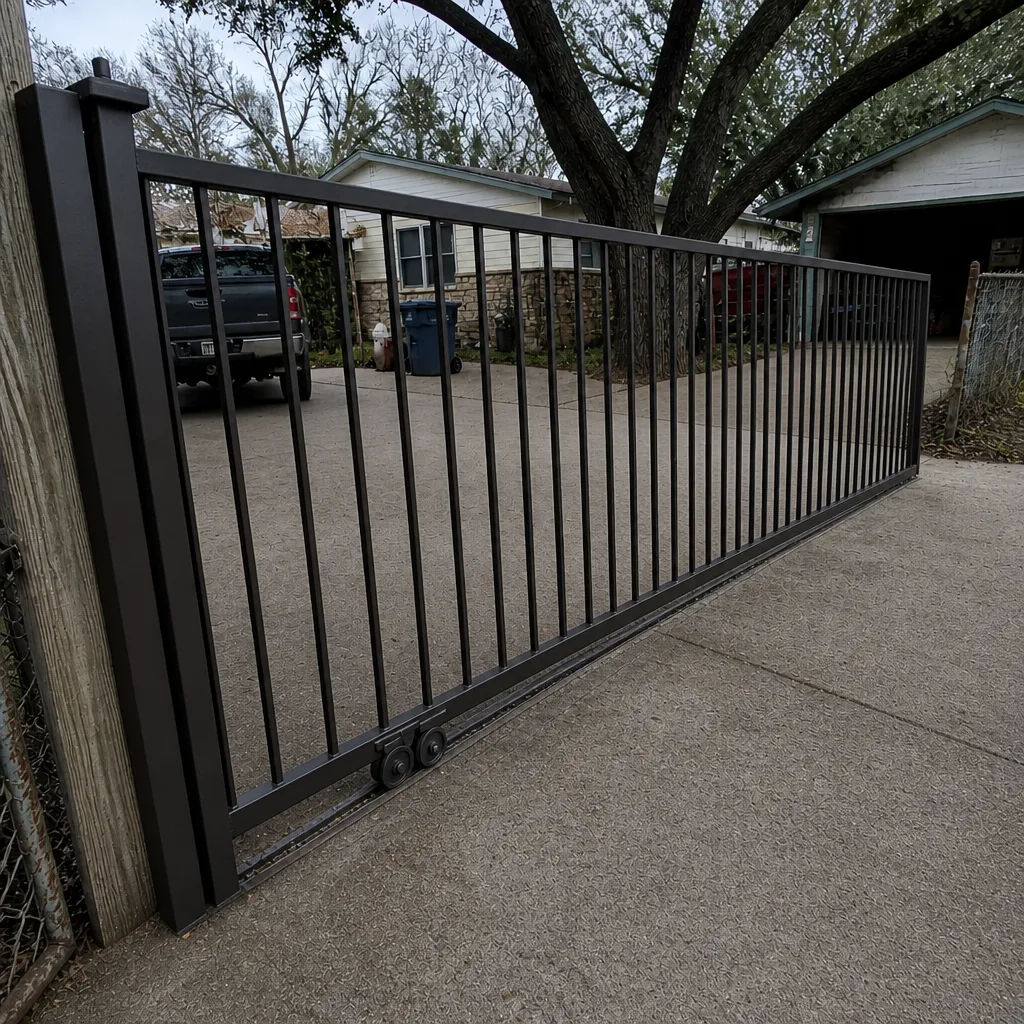
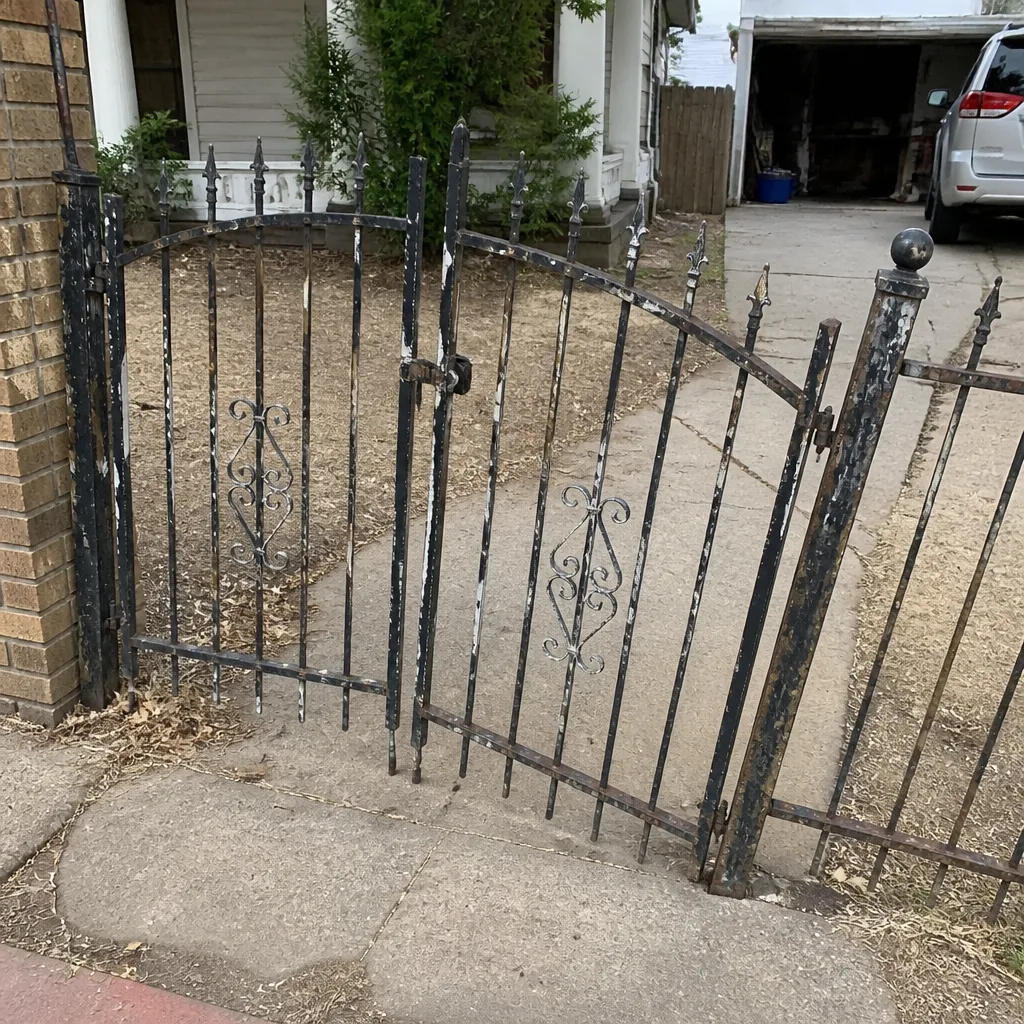
See the difference
 Before
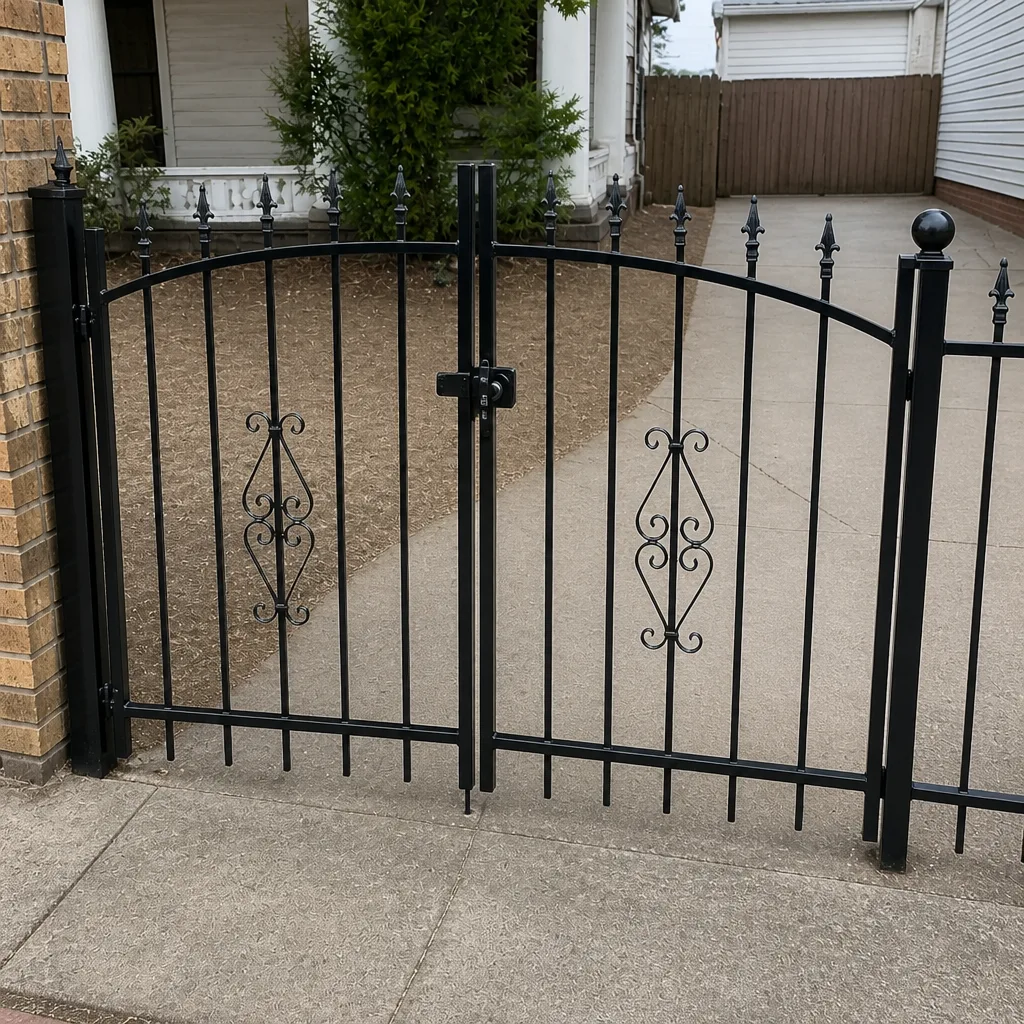
 After
 Before
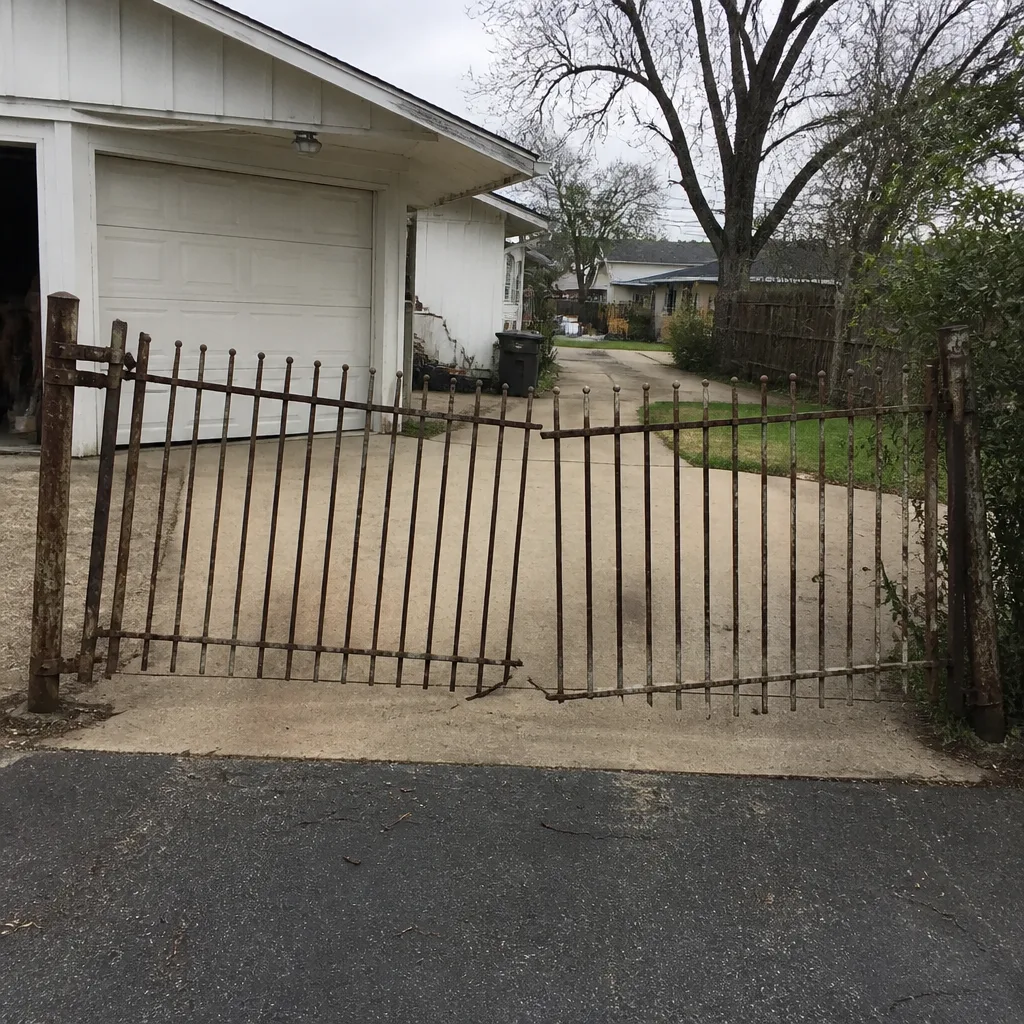
 After
 Before
 After
When to Call a Professional
Some situations are a call to a technician, not a maintenance task. Call when a gate reverses on its own, stops mid-travel without an obstruction, or makes a new noise from the motor or gearbox. Call when a safety sensor or edge device fails its test, and stop using the gate until it’s fixed. Call when the battery fails a load test or the operator won’t run on backup. Call when a post-storm check reveals a sensor or limit switch that won’t realign. And call when you’re not sure, because a specialist will tell you if it’s a repair or a replacement. Gate Repair Waco offers free estimates in Waco. Call (855) 638-3208. We answer 24/7. Fast dispatch from 7am to 7pm, Sunday through Friday.
Frequently Asked Questions
A residential gate with light use should be fully inspected once a year with lubrication checks every six months. A commercial gate with high traffic should be serviced every 90 days, because cycle count, not appearance, drives wear. A gate that runs 100 or more cycles a day needs the 90-day interval to catch wear before it becomes a failure.
No. In Central Texas heat white lithium grease softens into a sticky paste that traps grit and wears the chain faster than running it dry. Use a dedicated chain lubricant, preferably a dry or wax-based product, and reapply six-monthly for residential and every 90 days for commercial.
Test it under load, not just with a voltage meter. Disconnect the power input safely and cycle the gate several times on battery only. If it slows or stalls within a few cycles, the battery is weak and should be replaced before a power outage forces the issue. A voltage test alone can show healthy and still fail under the load of an actual gate cycle.
It’s usually a misaligned photo-eye sensor or a shifted limit switch, both of which wind and debris can knock out of position. Check the sensors first for debris or visible misalignment, and test the reversal. If the gate still reverses after a clear path, the sensor needs realignment or the operator needs diagnosis.
Yes, and it needs specific detail to be useful. Record the service date, cycle count, specific tasks performed, parts replaced with part numbers, and the technician or company that did the work. A log that says only “serviced” won’t support a warranty claim or an incident report when a component fails.
A gate specialist spends all field time on gates, so they test sensors, limits, and operators as routine practice. A generalist may fix what’s visibly broken but miss a dead edge sensor or a battery that only fails under load. If you’re in Waco and need a technician who works on gates every day, call (855) 638-3208. Estimates are free.
The Bottom Line
The right gate maintenance schedule isn’t a fixed calendar. Set it by cycle count first: residential gates get a yearly inspection, and high-traffic commercial gates get one every 90 days. Match the season to the task: check capacitors, thermal cutouts, and control boards in spring, and check limit switches and sensors after storms. Use the correct lubricant for each component, never white lithium on a chain. Load-test your backup battery rather than checking voltage. Test safety devices every 90 days and stop using a gate whose sensor has failed. Log every service with enough detail to support a warranty claim. If you want a technician to build this schedule for your gate, Gate Repair Waco offers free estimates in Waco. Call (855) 638-3208. We answer 24/7. Fast dispatch from 7am to 7pm, Sunday through Friday. For full-service work beyond maintenance, see Gate Repair Waco.
Written by the team at Gate Repair Waco, serving Waco since 2018.